Tagatic Blog - Experts in Visual Signage Production

Your visual signage knowledge center. Discover trends, practical tips, and solutions for your company's efficiency.
Production_hall_31482267-1280x853.jpg
2026-07-28

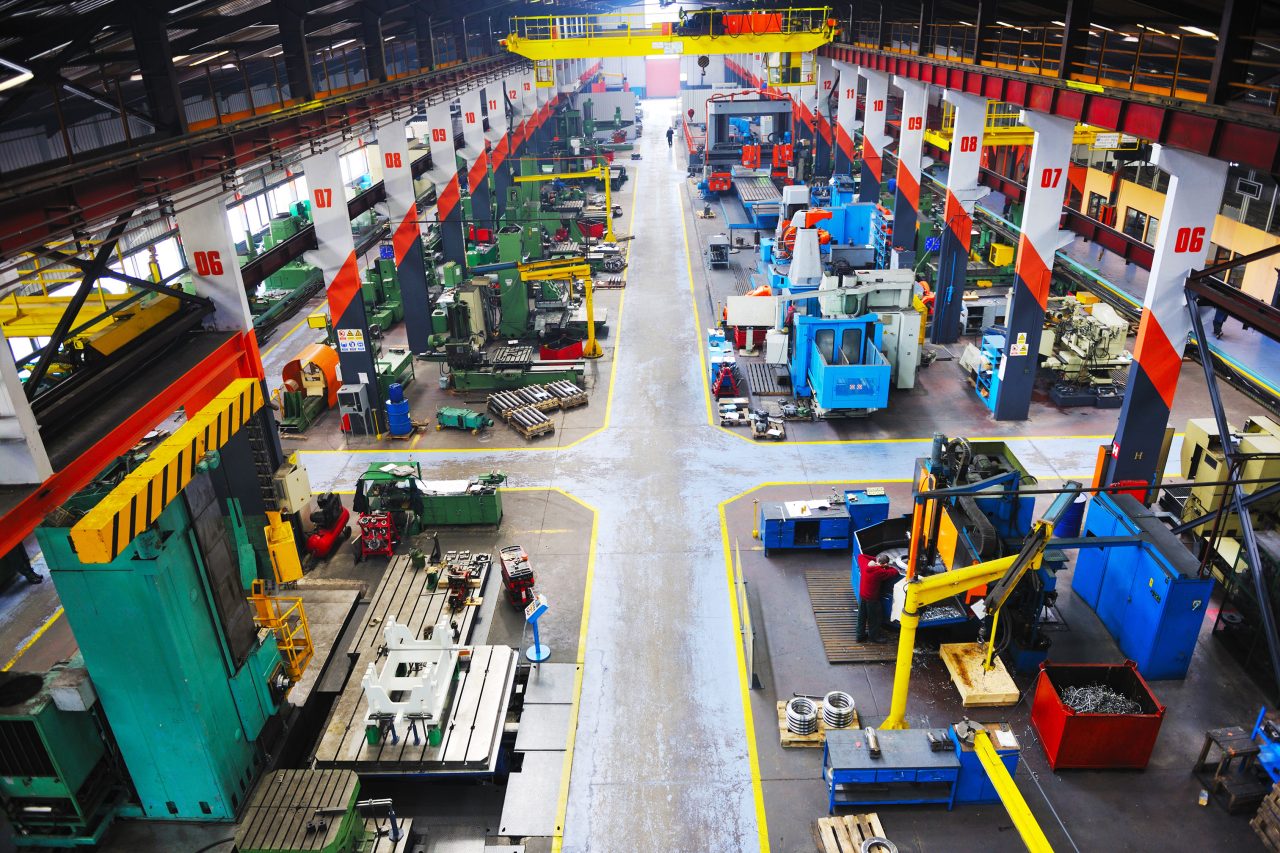
Lean implementation typically begins with training. The team learns the methodology, understands waste, and sees where flow can be improved. Then they return to the shop floor and encounter the same space as before the training. Tools are lying around, zones are unmarked, and information about process status resides in the shift manager's head.

The knowledge is there, but the conditions for its application are not.

Magnetic-frames_2_small-1280x855.jpg
2026-07-16

Creating a good job manual is a serious undertaking. Someone has to go through the process step by step, capturing all the important details, and writing them down in a way that's understandable to someone doing it for the first time. This takes time, knowledge, and commitment.

DSC02856-male-1280x853.jpg
2026-07-08

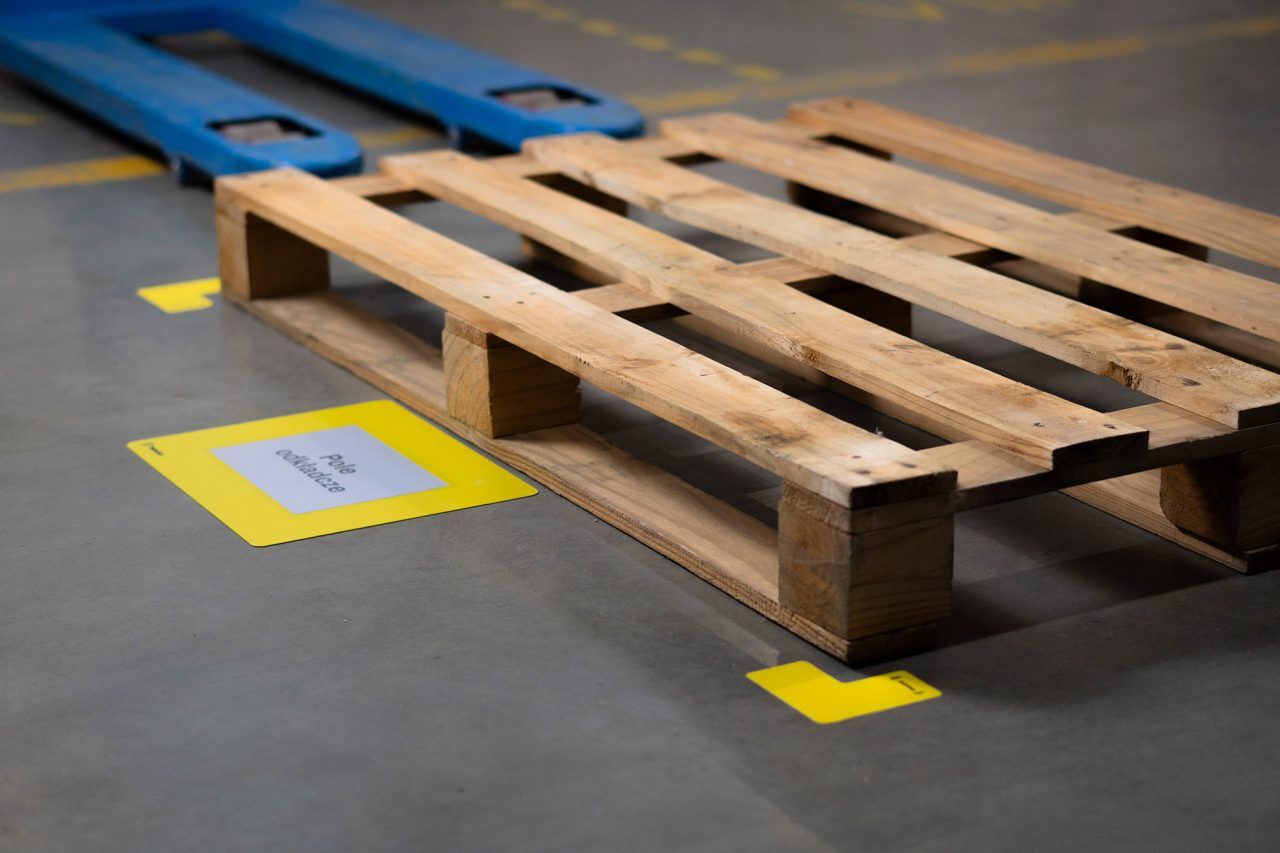
We sometimes hear people say that signage in the warehouse is a nice theory. That pallets don't end up in designated areas anyway, that a cleaning corner looks good in photos, but doesn't make much difference in practice. There's a grain of truth to this, but it applies only when signage or training is used separately, without a second element.


DSC03249-small-1280x854.jpg
2026-06-19

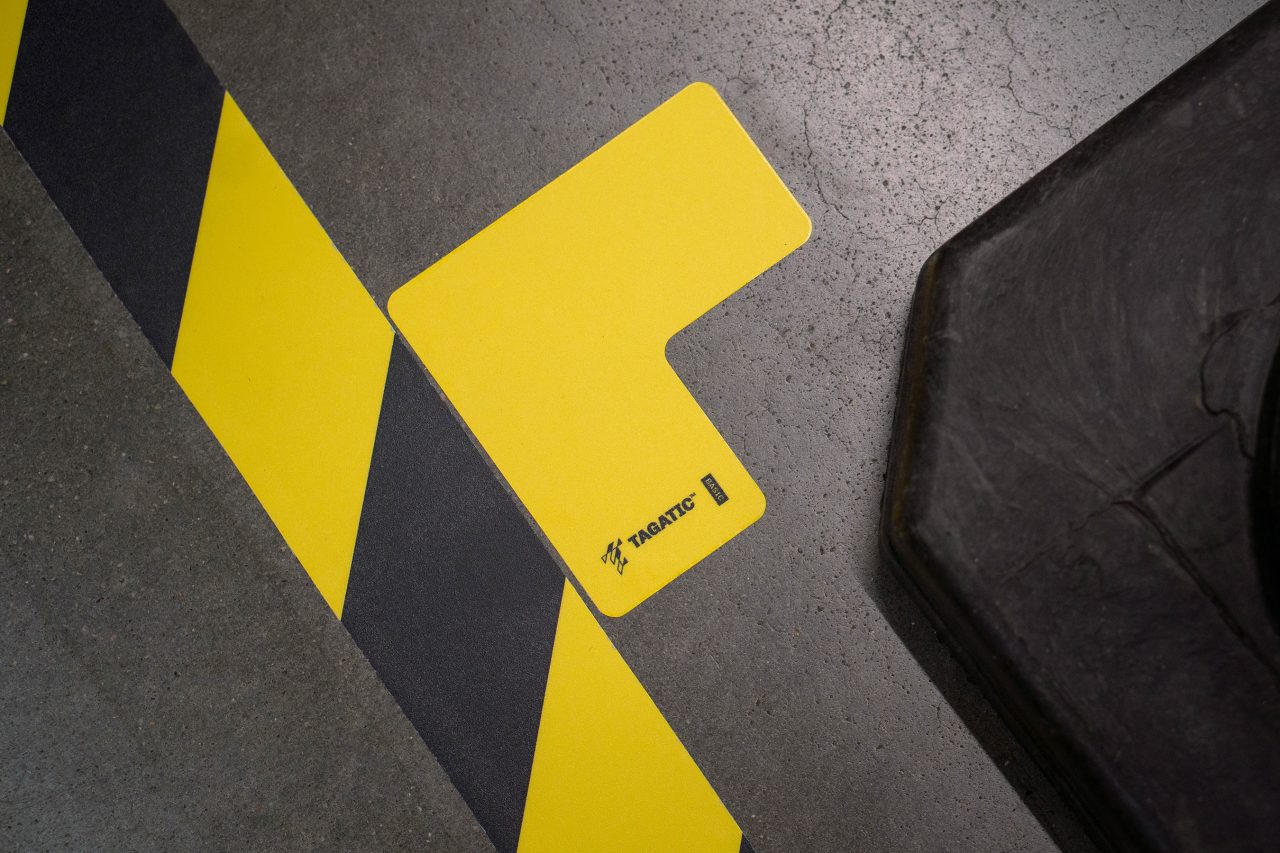
The durability of a floor tape depends primarily on the preparation of the substrate and the installation method, and only then on the product itself. The same BASIC tape can easily last several years in one facility and come off after a week in another, because each facility had a different floor condition and different application procedures. Before deciding which version to order, it's worth knowing what actually affects the marking's longevity.


Tagatic-ramka5s-1280x857.jpg
2026-06-11

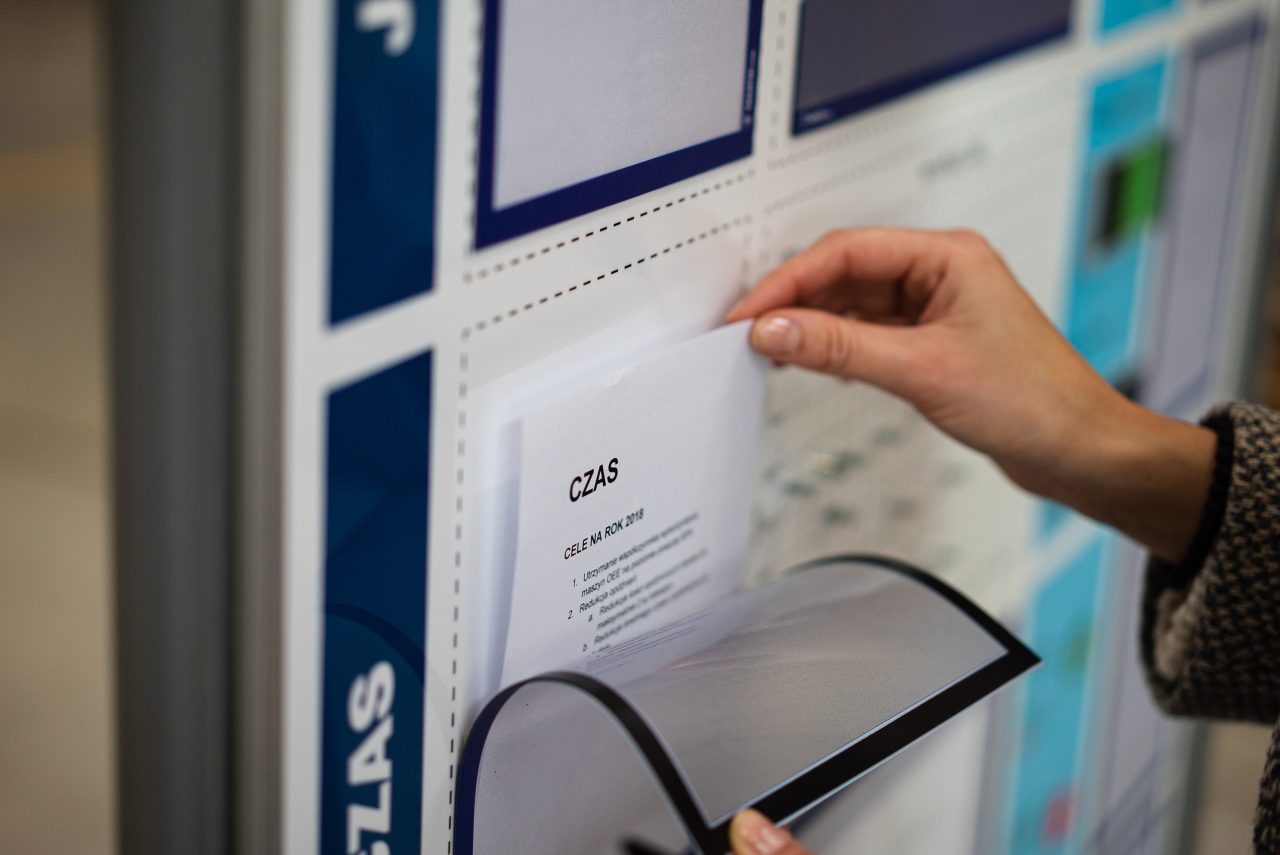
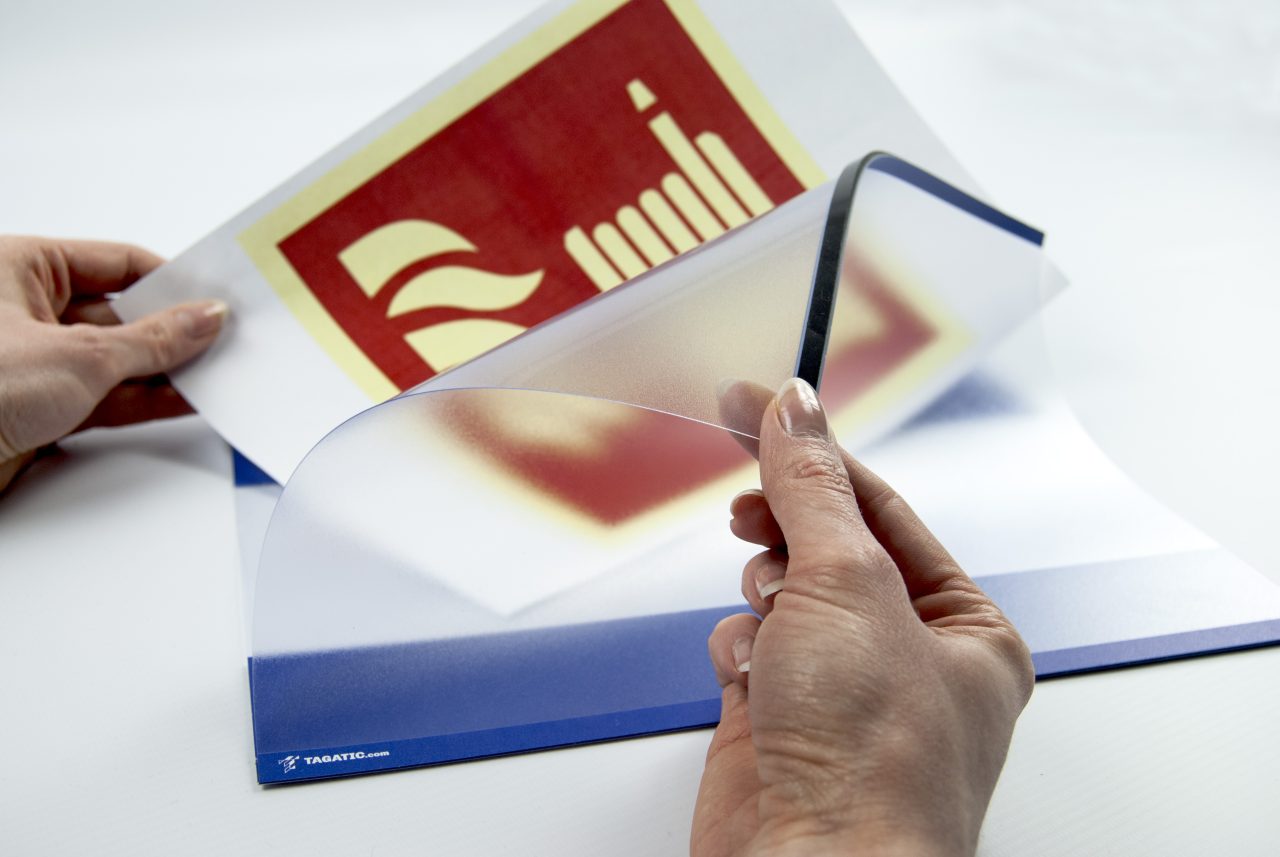
On most whiteboards, the pages are held together by four magnets. Four, because with three, one corner curls up. Someone walks by, catches it with their sleeve, the magnet falls, and the page flies after them. Someone else copies the text directly onto the board with a dry-erase marker to avoid fumbling with the magnets, but then it's impossible to read, the text changes, and copying the information requires more time. Sometimes the pages are laminated or taped. Each station develops its own method, and together they don't lead to order.

worker_warehouse-small-1280x853.jpg
2026-06-03

Every production hall or warehouse has its own unwritten map. Regular employees know it by heart. They know which way the forklift goes, where the emergency exit is, and which areas to avoid. A new employee enters with zero knowledge of the space and must navigate it independently before learning all the rules of the area.

machine-in-production-1280x853.jpg
2026-05-27

The production process can be conducted in many ways. Work can be divided among multiple operators, each responsible for a specific step. A linear flow can be established. Alternatively, solutions derived from the Toyota production system, such as chaku-chaku, can be employed. This time, we take a closer look at this method, specifically in terms of its demands on space and workstation organization.

shutterstock_2470161833-1280x856.jpg
2026-05-14

Every minute of machine downtime costs money. In manufacturing plants where product changes are frequent, changeovers are one of the biggest time-wasters. SMED, a methodology for reducing changeover times to under ten minutes, is the answer to this problem.