
5S Signage and Training – What Makes the System Work
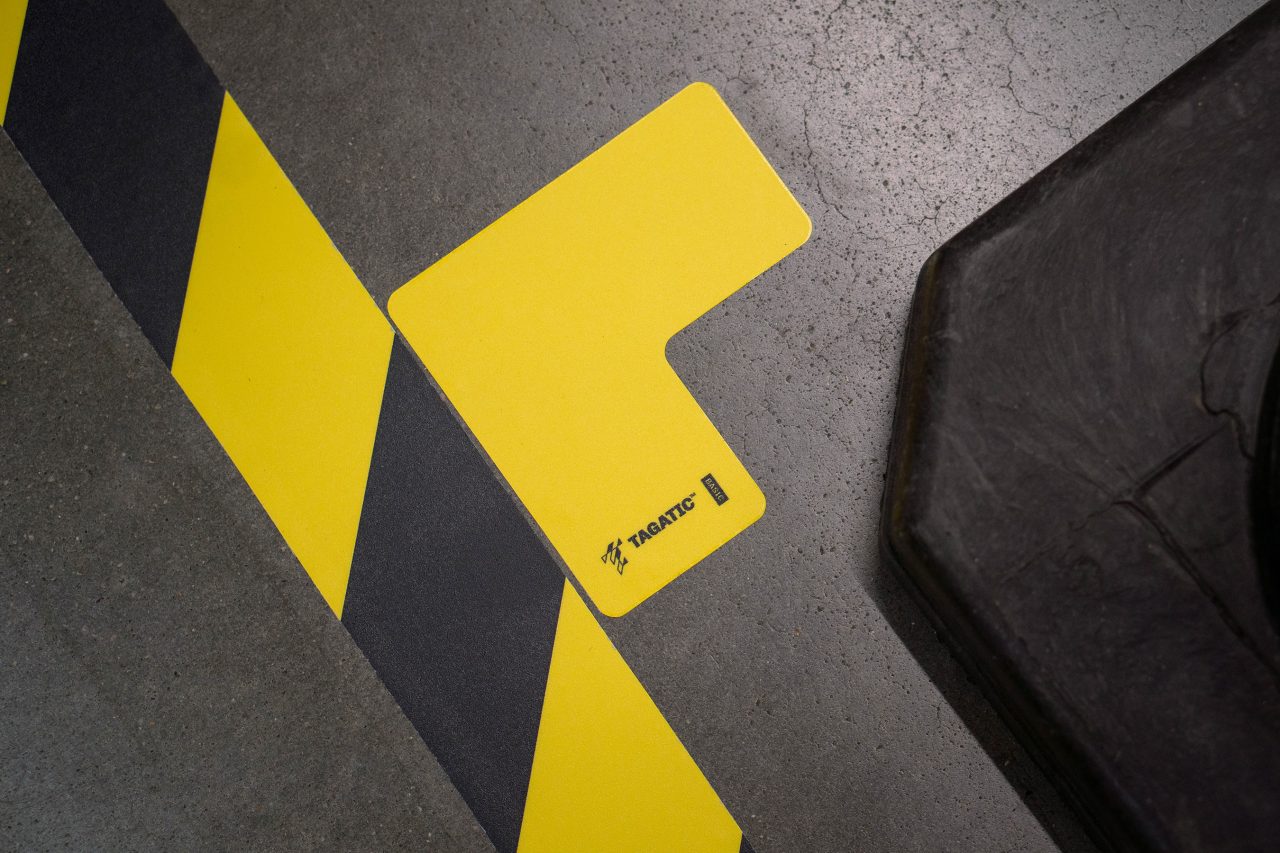
We sometimes hear people say that signage in the warehouse is a nice theory. That pallets don't end up in designated areas anyway, that a cleaning corner looks good in photos, but doesn't make much difference in practice. There's a grain of truth to this, but it applies only when signage or training is used separately, without a second element.
What changes the markings in the hall
Well-designed signage transforms the way people move around and perform work, often without any verbal instructions. Designated storage areas ensure that materials are placed in one place instead of wherever they are available. Clear communication routes shorten travel times and reduce the risk of collisions with forklifts. Marking work stations and tools speeds up any activity requiring someone to find or put away something.
Employees pay attention to what's clearly visible. If an area is marked, most people will use it as intended, especially at first.
The problem arises over time. Things that initially seem obvious begin to be treated as optional. Someone will put a pallet down next to the area because the other one was occupied and it wasn't worth the time. Someone will take shortcuts when putting away tools because it's faster. People naturally seek the path of least resistance and don't always realize how much time and energy violating the standard ultimately costs them. A shifted pallet takes just a few seconds. Multiplied by shifts, weeks, and the number of employees, it becomes a trivial matter.
Knowledge that stays in our heads
5S training gives employees an understanding of the system: why the standard exists, what happens when someone breaks it, and how individual steps interact. This is the foundation without which labeling is just a sticker on the floor.
Another challenge, however, is ensuring that the training knowledge actually sticks. Some things are forgotten after a week. Others are missed or distracted. Still others seem abstract until someone sees them applied in practice.
Visual management responds to such situations. Signage, instructions at workstations, frames with current procedures, and color-coded zones all serve as daily reminders of the rules, without further training. The space becomes a vehicle for knowledge that people once acquired but could easily have forgotten.
Self-discipline is something everyone forgets about
The first four steps of 5S—sorting, systematizing, cleaning, and standardizing—can be implemented through space design and teamwork. The fifth step, self-discipline, is a separate category. It's a habit that either develops or it doesn't, and no conveyor belt can do it on its own.
It requires an environment that reminds people of the standard daily, and people who understand why it exists. Signage and training together create precisely such an environment. If you're looking for a partner to handle the training side of this process, Leantrix specializes in 5S implementations in Polish manufacturing plants, with a particular emphasis on sustainable results.
When the system really works
Facilities where signage has a long-term impact typically implemented it alongside training, not instead of it. Employees understand why the storage area is where it is. They know what a missing tape means. And they know someone will check it.
Signage designed in isolation from teamwork will last a few weeks. The same signage implemented as part of a broader process can last for years.