
SMED training – shorter machine changeover time

Every minute of machine downtime costs money. In manufacturing plants where product changes are frequent, changeovers are one of the biggest time-wasters. SMED, a methodology for reducing changeover times to under ten minutes, is the answer to this problem.
What is SMED and what does the training teach?
SMED stands for Single Minute Exchange of Die, a concept developed by Japanese engineer Shigeo Shingo. Its basic premise is simple: changeover times can be drastically reduced by separating activities that can be performed while the machine is running from those that require it to be stopped.
SMED training teaches you how to perform a changeover analysis step by step: record and measure each activity, and then divide them into two categories:
- Internal operations – these can only be performed when the machine is stopped, for example changing a tool or adjusting parameters.
- External activities can be performed while the machine is still running. For example, preparing materials, tools, or documentation for the next order.
The key takeaway from SMED is simple: anything that can be done on a running machine shouldn't wait for it to stop. After this division, the next step is eliminating unnecessary movements and waiting, and implementing the new standard. The results can be spectacular: plants where changeovers took two hours can reduce their time to thirty minutes after implementing SMED, and sometimes much less.
If you're looking for reliable SMED training for your team, consider Leantrix, our partner. They specialize in practical implementation of Lean methodology, based on real-world processes, not just classroom theory.
How to support theory with practical solutions?
Knowledge gained from SMED training often clashes with the realities of the shop floor. Employees return with analytical tools, but encounter the same space as before the training. Without practical solutions that organize the workplace, theory remains theory. And sometimes simple tools that support employees in organizing their workspace are enough. An example from our own project perfectly illustrates this.
Process optimization with Tagatic accessories
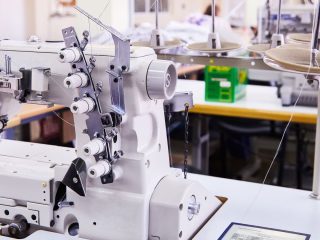
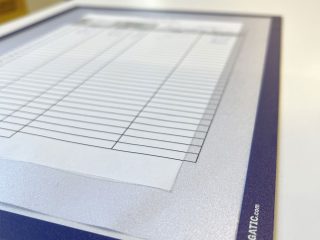
In the sewing plant, each employee completed a production cycle by signing a quality control card. The card was placed in a binder at the operator's feet. The entire process—bending down, pulling out the binder, finding the card, signing, and putting it away—took 27 seconds per cycle. After mounting a dedicated document holder directly on the assembly table, the same task took 11 seconds. In a plant with 30 workstations and two shifts, this meant 540 minutes saved each day, or 36 more products, without changing the work pace.
What specifically influences changeover time?
When analyzing changeovers from an SMED perspective, many losses result from the same sources.
Searching for tools
The operator knows what he needs, but the tool isn't in its proper place because the previous shift left it somewhere nearby. A few minutes of searching for it during each changeover adds up to a real number of hours per month.
There are no markings at the site
Which key goes with which machine? Which setting goes with which product? Without clear labeling, the operator has to remember or ask, and every question means a halt.
Documentation in the wrong place
A changeover manual in the manager's locker is essentially useless. It must be at the workstation, visible, and up-to-date.
No standard for materials and components
If the components for a new order are not prepared in advance and are not in the designated place, the operator wastes time looking for them after the machine has stopped.
How does workplace organization support SMED?
A trained team sees waste differently. An employee who has completed SMED training understands that every second spent searching represents changeover time that could be shortened. They begin to view the space around them differently and naturally begin to see value in solutions that organize it.
Shadow boards at the changeover station
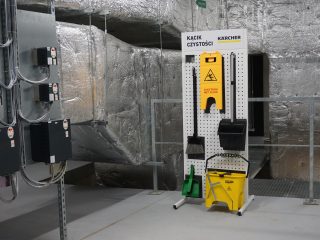
A shadow board is a panel where each tool has its own location, marked with the outline of its shape. When a tool is placed on the board, the shadow disappears beneath it. When the tool is not there, the shadow remains, making it immediately clear what's missing. During changeovers, where time is measured in seconds, the operator doesn't search. He reaches where he always needs what he needs.
Shadow boards can be hanging, standing, or mobile, allowing them to be brought directly to the machine for changeovers. When a single station handles multiple changeovers, the tool arrangement on the board can be designed to suit each type.
Markings and document frames at the stand
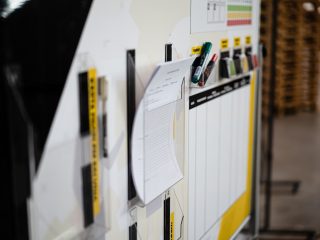
The conversion manual should be hung next to the machine, not stored in a binder. Magnetic frames on the dry-erase board allow for quick document replacement when an order changes, without dismantling the entire board. Sliding frames with an anti-reflective surface protect documents from damage and remain legible even in difficult lighting conditions.
If the data for retooling, machine parameters, and settings change frequently, a dry-erase board at the workstation allows you to update them with a marker, without printing and replacing the entire manual.

Marking of storage zones and places
Designated, clearly marked locations for components for the next job are a fundamental requirement for SMED. Materials must be ready before the machine stops, rather than being searched for after it stops. Floor markings and storage areas marked "next job" eliminate one of the most common causes of wasted internal time.
A conscious employee, a better space
There's another dimension to this relationship. Employees who understand why a workplace organization standard is important adhere to it.
A facility that invests in both team training and space organization achieves results that neither investment alone can provide. SMED training without a structured workstation is knowledge without the conditions for its application. A structured workstation without an understanding of waste is a tool that no one uses as it should.
If you'd like to see how specific workplace organization solutions look in practice, visit our store or contact us. And if you're planning SMED training for your team, check out Leantrix's.