
Suggestion system on the production floor - corners, ballot boxes and boards

No manager can see everything. An operator who spends eight hours a day on the same machine sees things that aren't visible from the office: minor hiccups, recurring problems, areas where something could work better. A plant that can gather and utilize this knowledge improves faster than one that relies solely on management's ideas.
The Idea Box is Just the Beginning
In the Kaizen philosophy, the Japanese concept of continuous improvement, an employee suggestion system is one of the fundamental tools for team engagement. The idea is to provide every employee with a simple way to submit an idea without having to schedule a meeting with a manager or fill out a form in the system.
The physical form is crucial here. The simpler the submission process, the more ideas will be received. A suggestion box at the hall entrance or near the social area is a point anyone can approach without attracting attention. The employee simply inserts the note and moves on.
For the system to work, everything an employee needs should be available at the ballot box: a short and simple submission form, a pen, blank sheets of paper. And information about what happens to the idea after it's submitted and who is responsible for responding.
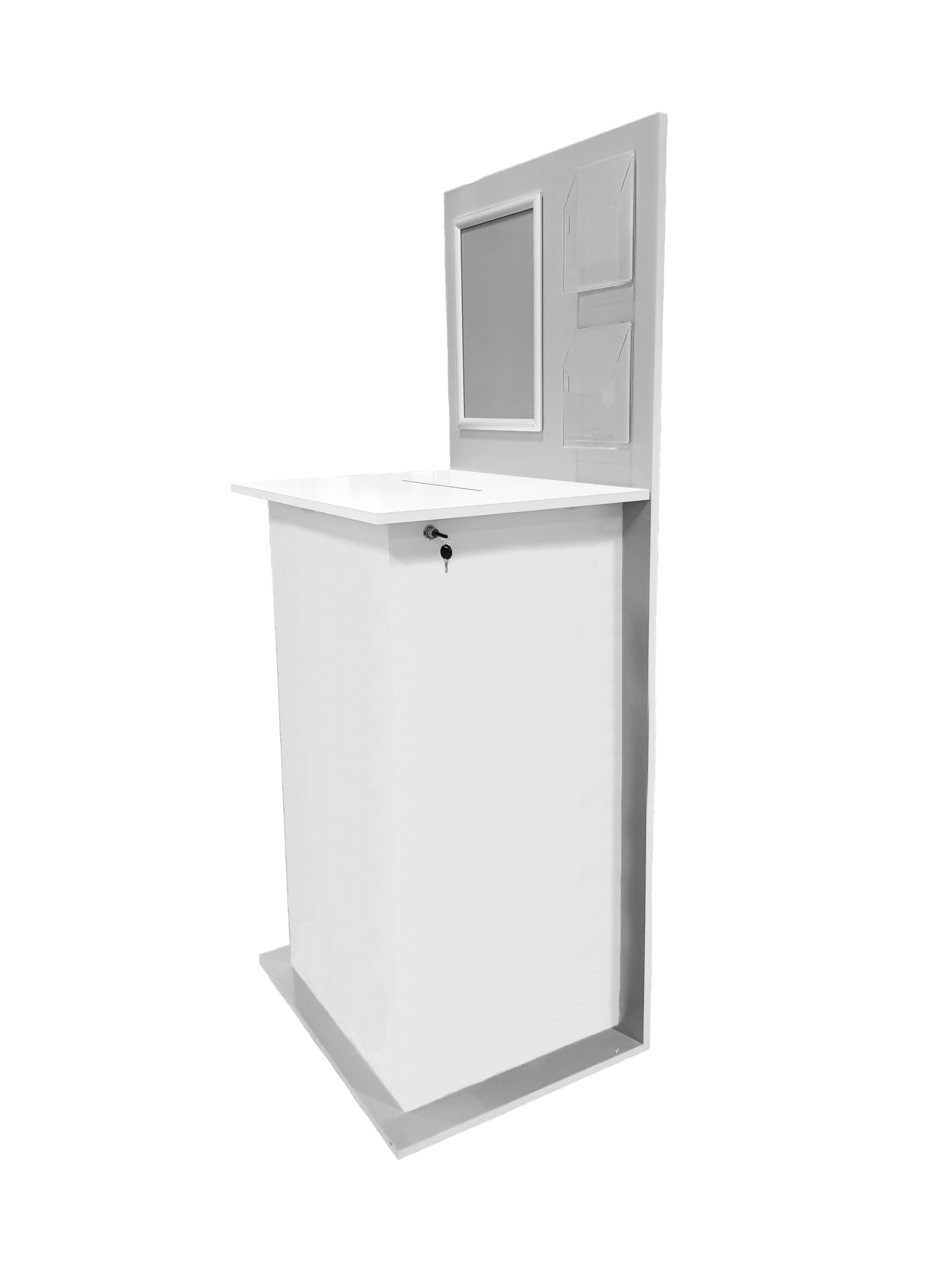
Suggestion Board: Ideas visible to everyone
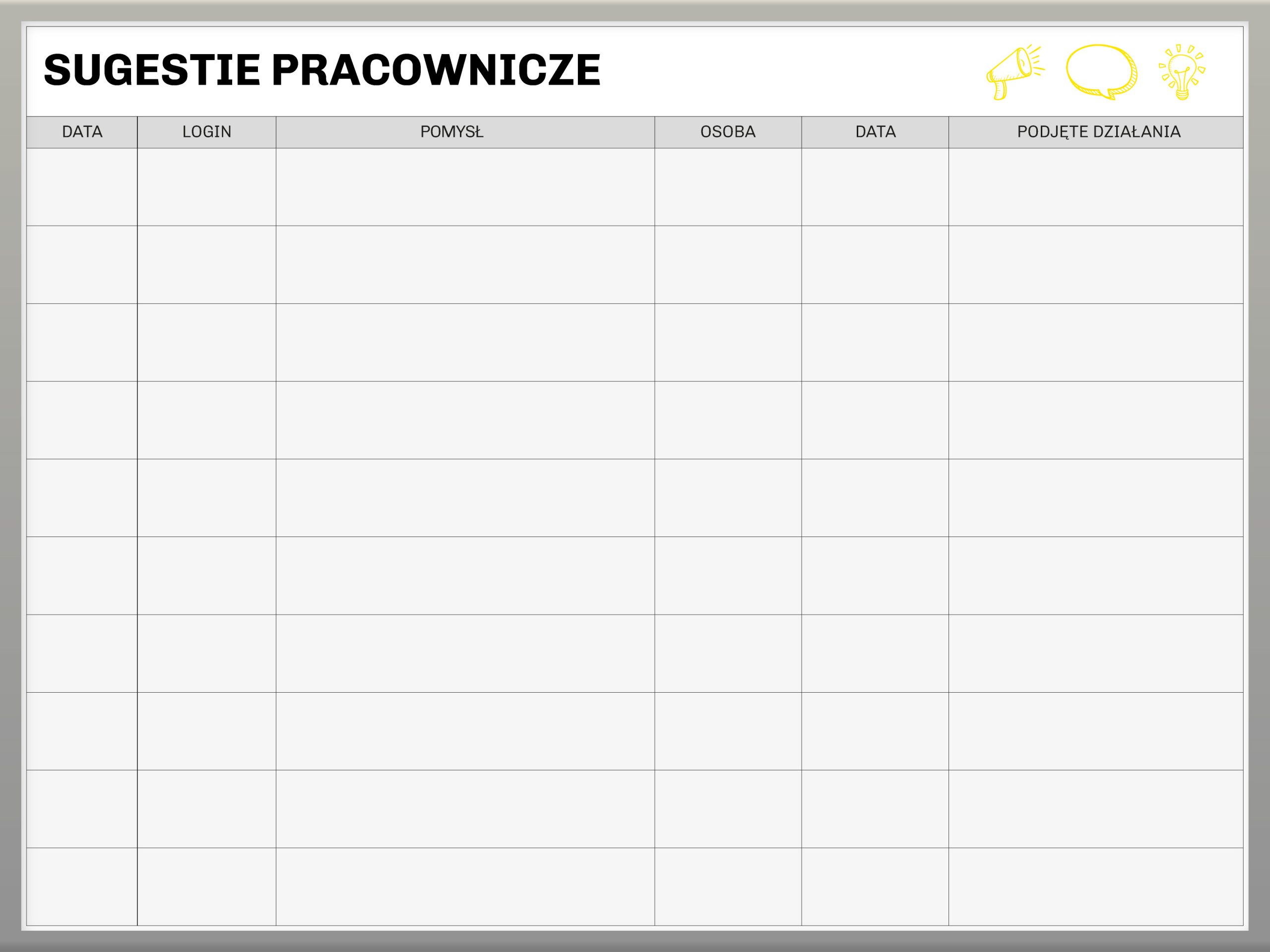
A ballot box collects ideas but doesn't display them. A suggestion board goes a step further. Submissions are publicly visible, which in itself fosters a culture of sharing. Employees write their ideas directly on the board or pin them in a designated spot. Everyone can see what others have submitted, what is being evaluated, and what has been implemented.
On a dry-erase board with magnetic frames, the status of each report can be marked: new, under evaluation, implemented, or rejected with explanation. The magnet moves from column to column along with the idea. The employee sees that their report has been addressed and is being addressed. This is a fundamental requirement for submitting another report in a month.
It's worth showcasing implemented ideas in a before/after format. This board is inspiring and demonstrates that the system is real, not just a wall decoration.
Why do suggestion systems often die?
The problem rarely lies with the tool itself. The mailbox sits there, employees submit their papers, and then nothing happens. Ideas sit idle for weeks, with no feedback, no explanation for why something was rejected. After a few weeks, the mailbox is empty because no one believes it makes sense anymore.
The longer it takes to implement individual ideas, the fewer they will be submitted. It's a simple equation. If an employee submits an idea and doesn't know what's happening with it two weeks later, they won't submit anything the next time.
Therefore, the response rate is just as important as the tool itself: who reviews reports and when, who decides on implementation, how quickly the employee receives a response. A weekly review of reports, brief feedback for every idea, and monthly communication about implemented improvements. This is the bare minimum that keeps the system running.
A tool is not a culture
A suggestion box, whether it's a ballot box or a board, is a tool. A culture of continuous improvement is more than that. Simply hanging a board and putting up a ballot box won't change team habits. But in an environment where management actively responds to suggestions and demonstrates results, a suggestion box becomes a visible signal: your opinion matters.
If you're looking to build such a system from scratch or improve an existing one, it's worth starting by understanding what's blocking employees from submitting ideas. Leantrix specializes in implementing suggestion systems and Kaizen culture in manufacturing plants. We can design and build the physical tools, such as the whiteboard and ballot box, together with you.