
Pedestrian crossing in the hall – how to mark it?
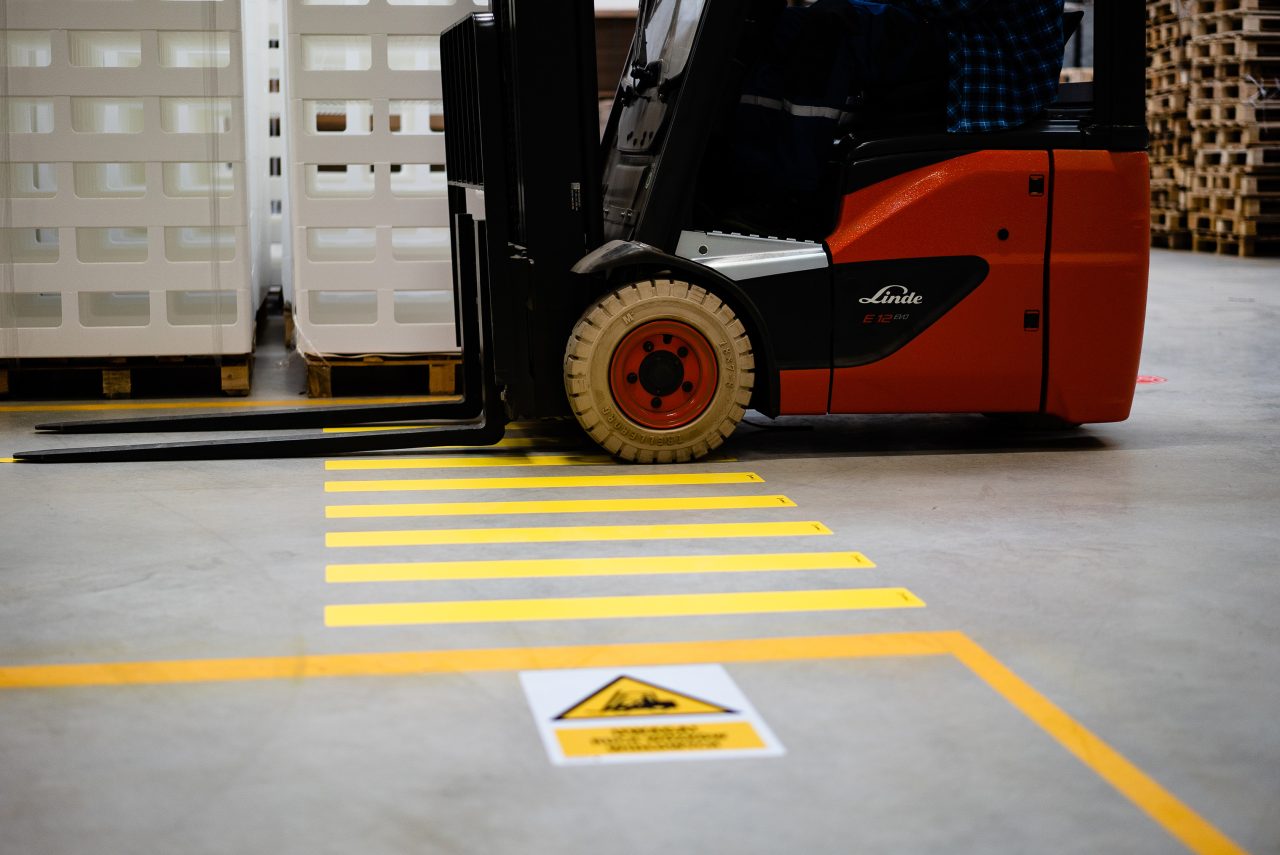
On a production floor, the intersection of pedestrian paths and forklifts is one of the most dangerous places. This is because the operator of a forklift weighing several tons cannot always predict pedestrian movements, their field of vision may be limited, and a collision can be fatal.
How to mark a pedestrian crossing in a hall to make it truly safe?
To avoid dangerous situations, traffic rules, communication paths and order of priority should be clearly described in advance using signage.
First: paint or sticker?
Before the first sign appears, there's a decision many overlook. How should the routes be marked—paint or tape and stickers?
Paint is more durable and less expensive in the long run. This works well when the facility is company-owned, the track layout won't change for years, and you can afford a few days of downtime while painting.
Professional stickers and tapes offer flexibility. If you're renting a facility, planning to reorganize your production line in a year, or simply need time, Heavy Duty stickers and Pro tapes are a choice you can undo or change without a drill or sander.
In practice, we select the solution for the client, not the other way around.
Who walks here and who drives?
Once the routes are designated, the actual communication begins. A blue pictogram with a human silhouette appears on pedestrian paths, and a similar sign with a forklift appears on forklift routes. Simple yet effective, everyone, even a new employee on their first day, immediately understands the division of space.
We also use foot-shaped stickers on pedestrian paths, placed in the direction of travel. It's one of those details that looks aesthetically pleasing in photos, but in practice acts as a subconscious guide. People naturally follow the pattern on the floor.
Where the paths cross, things get serious
The intersection of a pedestrian and a wheelchair route is the most risky spot. Here, simply designating a lane isn't enough.
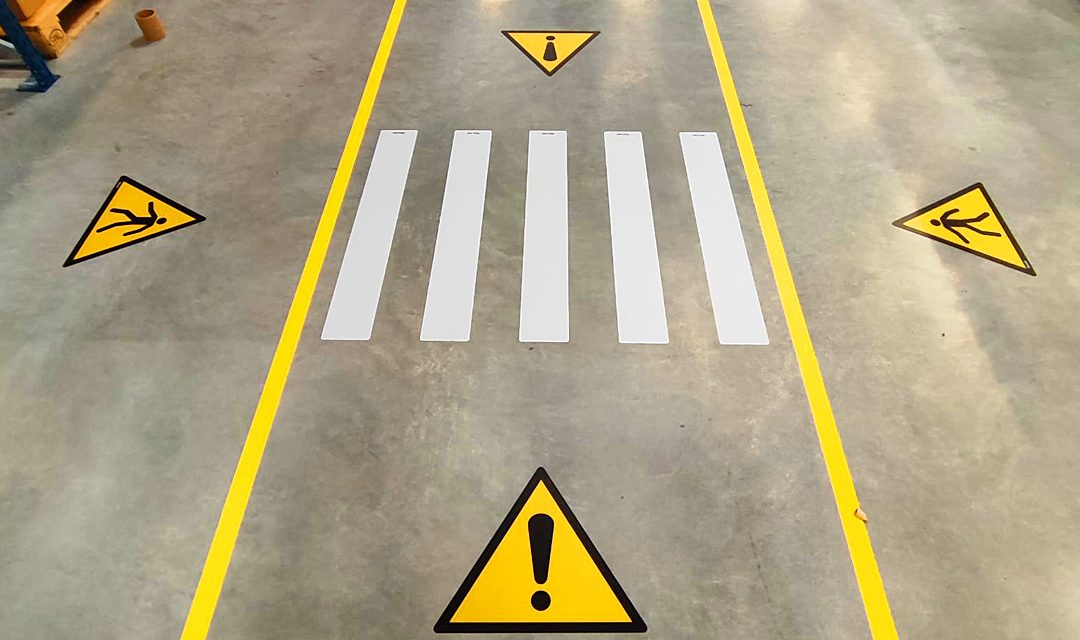
We use pedestrian crossing lanes, visually identical to those we know from the streets, only in an industrial version, glued or painted. But lanes alone are not enough. Before each such intersection, two additional signs appear: "Beware of pedestrians" on the side of the forklift route and "Beware of forklift traffic" on the side of the pedestrian path. Each route receives a warning about what it is about to encounter.
The result is that the intersection becomes a place that's hard to ignore. It's impossible to cross without consciously looking in both directions.
System, not character set
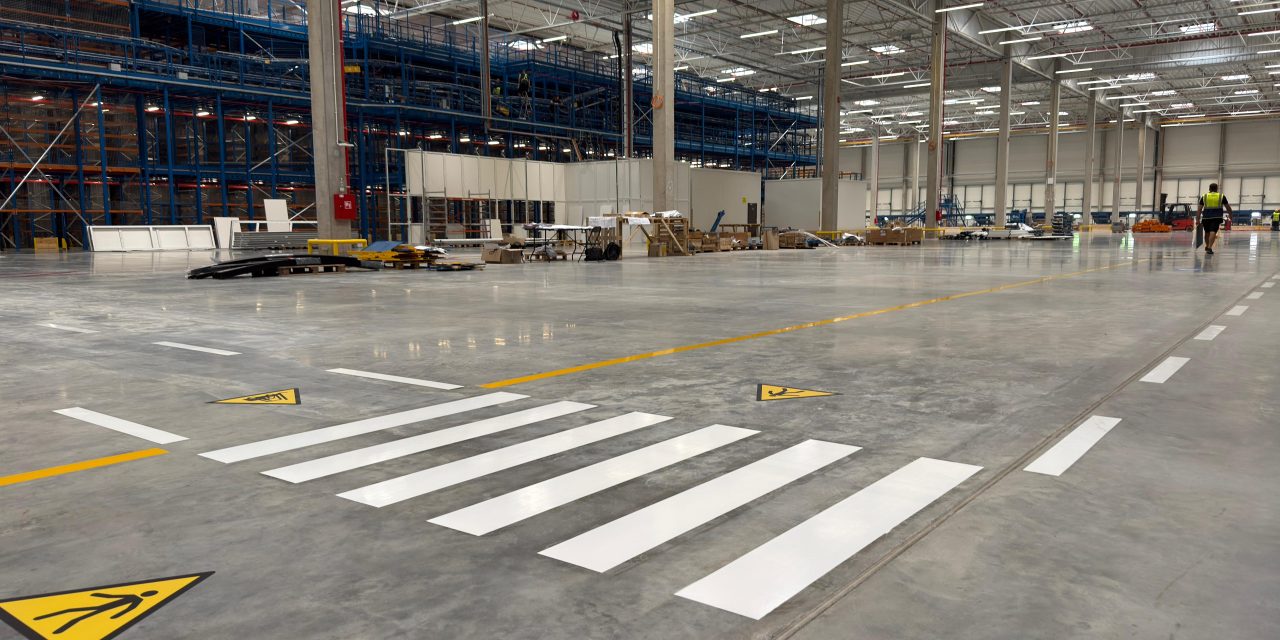
The markings that define zones, indicate rules for navigating within them, provide directions, and warn of dangers form a system that ensures no one has any doubts about how to navigate.
If you'd like to see what this system looks like in practice, check out our completed projects. There, you'll find projects where we've handled the entire process, from layout design to final sticker installation.