
Visual management and signage in the automotive industry
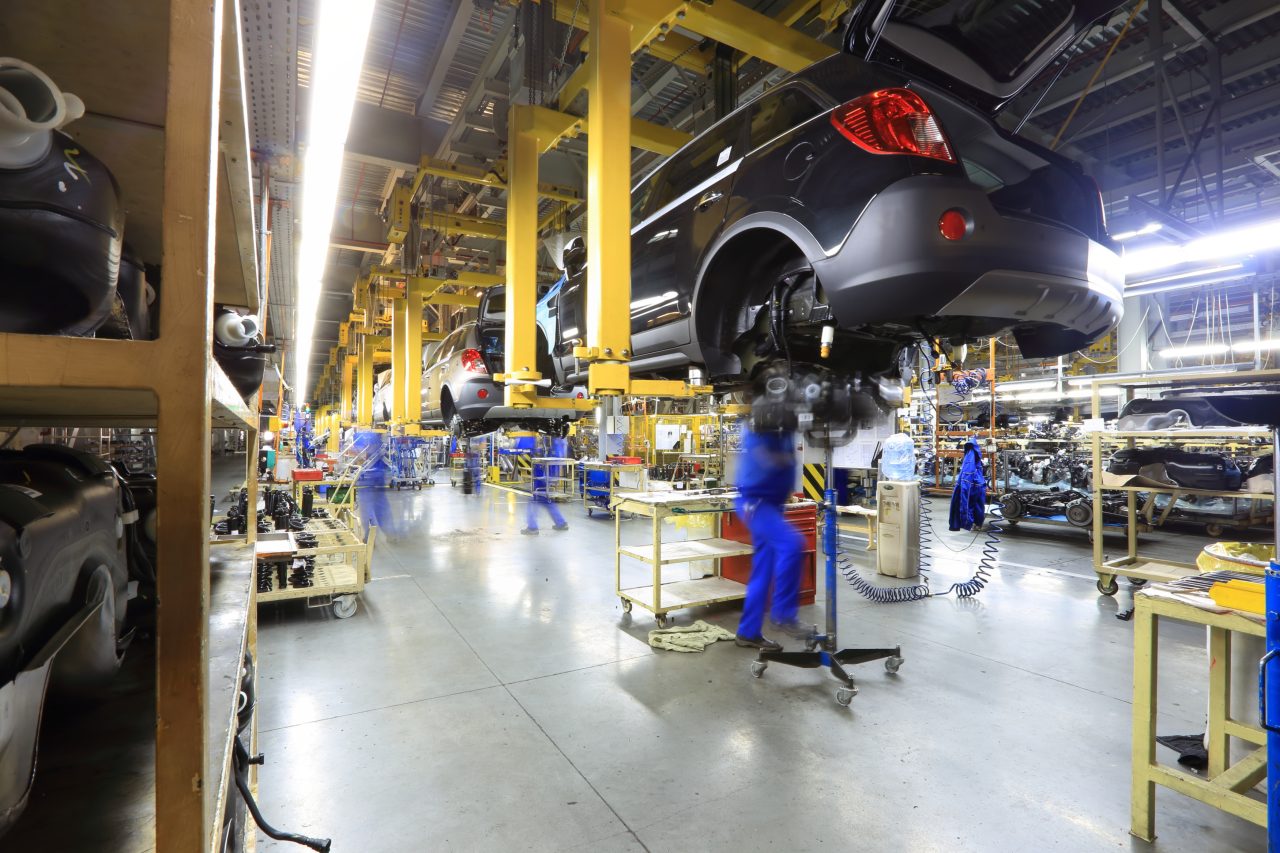
The automotive industry is unforgiving. Components are manufactured with tolerances down to tenths of a millimeter, assembly lines are synchronized to the second, and just-in-time deliveries are inevitable. In such an environment, every element of spatial organization must function flawlessly, because the consequences of disorder are immediately felt.
Why does the automotive industry place special requirements on labeling?
Automotive industry facilities are often large, multi-shift work environments, with dozens of employees, forklifts, and automated transport systems moving around simultaneously. A new employee or temporary worker must quickly navigate the space, understand its logic, and function safely in an environment that can be overwhelming for an outsider.
In addition, there are specific process requirements: cleanliness zones, quality control areas, pre- and post-assembly component storage areas, non-conforming product zones, and service routes. Each of these spaces must be clearly designated and immediately recognizable to anyone passing through them.
The floor as a map of the plant
In an automotive plant, the floor is the first and most important conveyor of spatial information. Transport routes, pedestrian zones, storage areas near production cells, component storage areas, and buffer zones between production stages all have their own color, location, and logic.
Yellow for transport routes, green for compliant products, and red for non-compliant product zones or areas where nothing should be permanently installed. This color system must be consistent throughout the entire facility, because an employee walking between halls shouldn't be left wondering whether yellow means the same thing here as it does there.
In production cells, storage bays marked with a maximum level are particularly important. In an environment where material flow is synchronized with the line cycle, excessive buffering is a sign of a problem, not a solution. A visible maximum marking ensures everyone can immediately see when something is starting to slip.
Job position: zero time for searching
In automotive production, cycle times are strictly defined. Every second spent searching for a tool, reading a sticker stuck to the side, or figuring out which component is for which operation is a waste that adds up throughout the entire shift.
Shadow boards at production and assembly stations eliminate searching. Each tool has its own outline and location, so you can immediately see what's missing. Document holders at the workstation ensure the current manual is always in view, and changing it when a job changes takes seconds.
Occupational health and safety stickers on specific machine elements and workstations remind us of the rules that are particularly important to follow in the automotive industry: personal protective equipment, order of operations, and hazards specific to a given workstation.
Vertical markings: information at eye level
In large automotive halls, where noise and work intensity are high, information must be easily accessible. Hanging signs identifying sectors and production cells allow workers to quickly locate the correct location without question or getting lost. Evacuation and fire signs must be visible from every point in the hall, which, in an environment with intense traffic and a large number of machines, requires thoughtful placement.
Visual management in production plants: our experience
Visual Management in the automotive industry is more than just floor stickers. It's a coherent system that includes horizontal markings delineating paths and zones, vertical markings on walls, columns, and machinery, hanging signs identifying sectors and production cells visible from a distance, and board and workstation accessories that streamline daily workflows.
We've had the opportunity to implement such solutions in numerous production facilities, both when opening new spaces from scratch and reorganizing existing facilities. Each project begins with mapping the space and understanding its logic, ending with a finished system that's operational from day one. Below are a few examples of this in action.
Get to know our projects
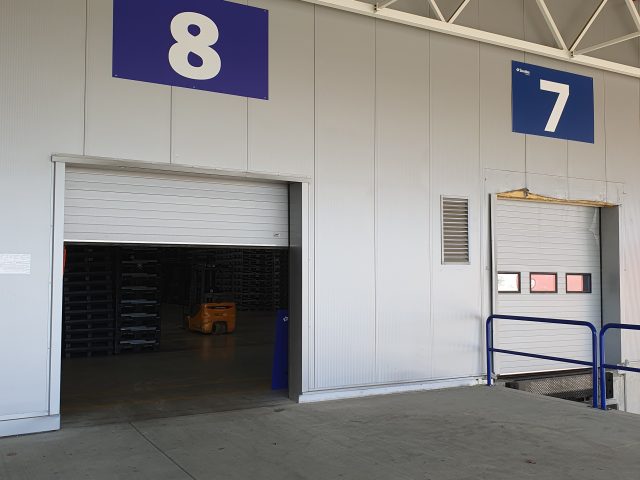


Learn more about the projects we have completed for our clients in the automotive industry and beyond.
Signage is the foundation, but not the whole story
A well-designed space is a necessary, but not sufficient, condition. In the automotive industry, where work standards are precise and unsurpassable, signage alone is no substitute for a trained and informed team. Employees must understand why the system is designed this way and how to use it to ensure its long-term effectiveness, not just in the initial weeks following implementation.
In this area, it's worth seeking specialist support. Leantrix conducts lean management training and workshops dedicated to production environments, including automotive plants. Signage creates order in the space. Training encourages people to maintain this order.