
What is 5S really and how to maintain it?
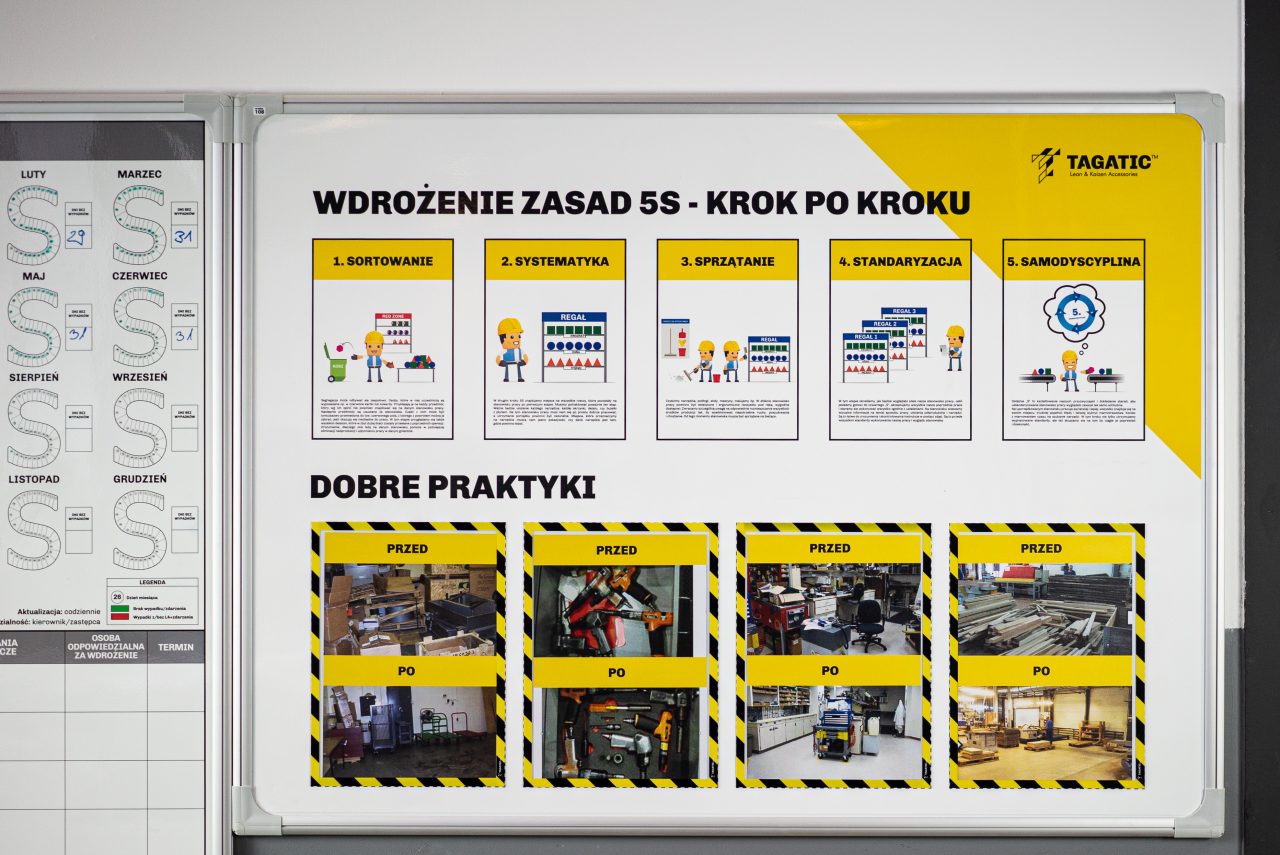
5S is one of the first things implemented in a plant after Lean training. It's also usually one of the first to stop working.
5S is not just about order
Most 5S implementations are successful. At least for the first three months. After that, the standard begins to deviate, not because the method is bad, but because the standard never made it from the presentation slides to the production floor.
5S is a workplace management method developed in Japan, derived from the Toyota Production System. Its goal is simple: to organize every workstation so that every employee (new or experienced) can immediately see what's in place, what's wrong, and what needs to be done. It sounds simple, but in practice, most plants stop halfway.
Five steps that really matter
If you're hearing about 5S for the first time, here's the gist:
Selection
The first thing you do on the floor is throw away everything you don't need. Red cards are placed on every item that doesn't have a purpose in the job. Tools that haven't been used in months, parts from a previous project because "they might come in handy again." All of this is named and physically moved or disposed of.
Systematization
Each item that remains gets its own place. A number 17 wrench hangs on a shadow boardwith an outline of its shape. The pallet truck is positioned in a zone marked on the floor. The container containing the material is in a storage area with a label.
Cleaning
This isn't a one-time cleanup before an audit. It's a regular cleaning of the workstation, where you can immediately check whether the machine is leaking, whether the tools are working, and whether anything is starting to break. Cleaning becomes a way to detect problems before they become failures.
Standardization
This is the step where most implementations stop. Establishing the first three steps is one thing, but the standard must be written, visualized, and enforced. Everyone must know exactly what they're responsible for and what their position should look like at the end of their shift. Without this, everyone interprets the rules differently.
Self-discipline
The final step is to ask: Do people return to the standard on their own, or do they need to be reminded to do so? 5S audits are designed to measure the level of self-discipline and identify areas where the standard is failing.
Where do most implementations really go wrong?
Returning to the plants that implemented 5S and returned to square one, one common denominator can be noticed: The standard was in their heads or on a piece of paper, but it wasn't visible on the floor.
We've seen this many times. Storage areas marked with masking tape that peels off after a week. Boards with hand-drawn tables. Notes with printed job descriptions taped to tables. Each of these solutions works for a while, then breaks down, and no one is motivated to renew them a third time.
The paradox is that companies that "save" on physical signage elements end up spending more on corrections, printing more sheets and, as a result, on more workshops because "5S doesn't work again.".
A standard that is not visible does not exist. At least not for long.
What keeps 5S alive?
The physical components of the 5S system are tools that make the standard objective. Everyone sees the same thing and evaluates it according to the same criteria.
- 5S frames – for documents, work instructions, and control cards. Instead of a sheet of paper taped shut, which turns yellow and falls off, a frame with a place to insert and replace a document. The work station always looks the same, regardless of who's leading the shift.
- 5S Floor Windows – for marking floor zones. Durable, recessed or glued, with space for a replaceable insert. No tearing, no messy tape edges, no reprinting after every furniture move.
- Storage area markers – they permanently and clearly designate zones on the floor. A forklift is here, a pallet is there, and the entrance is always clear. Everyone can see it, without explanation.
- Cleaning corners – a place for cleaning tools with a shadow board showing what's hanging where and what's missing. Step three (cleaning) only makes sense when the tools are in their proper place and you know what's missing.
If you are looking for these accessories, visit our store and learn more!
In short, what is 5S really?
5S is a system that makes any deviation from the standard immediately visible, without question, without searching, without explanation. It's not a cleaning method or a one-time project. It's a way of organizing space that only works when it's physically embedded in the shop floor: in markings, in locations, in tools.
Facilities that understand this have a 5S system that survives employee turnover, job changes, and external audits. Other facilities clean up before each visit.