
How does Visual Management support occupational health and safety?
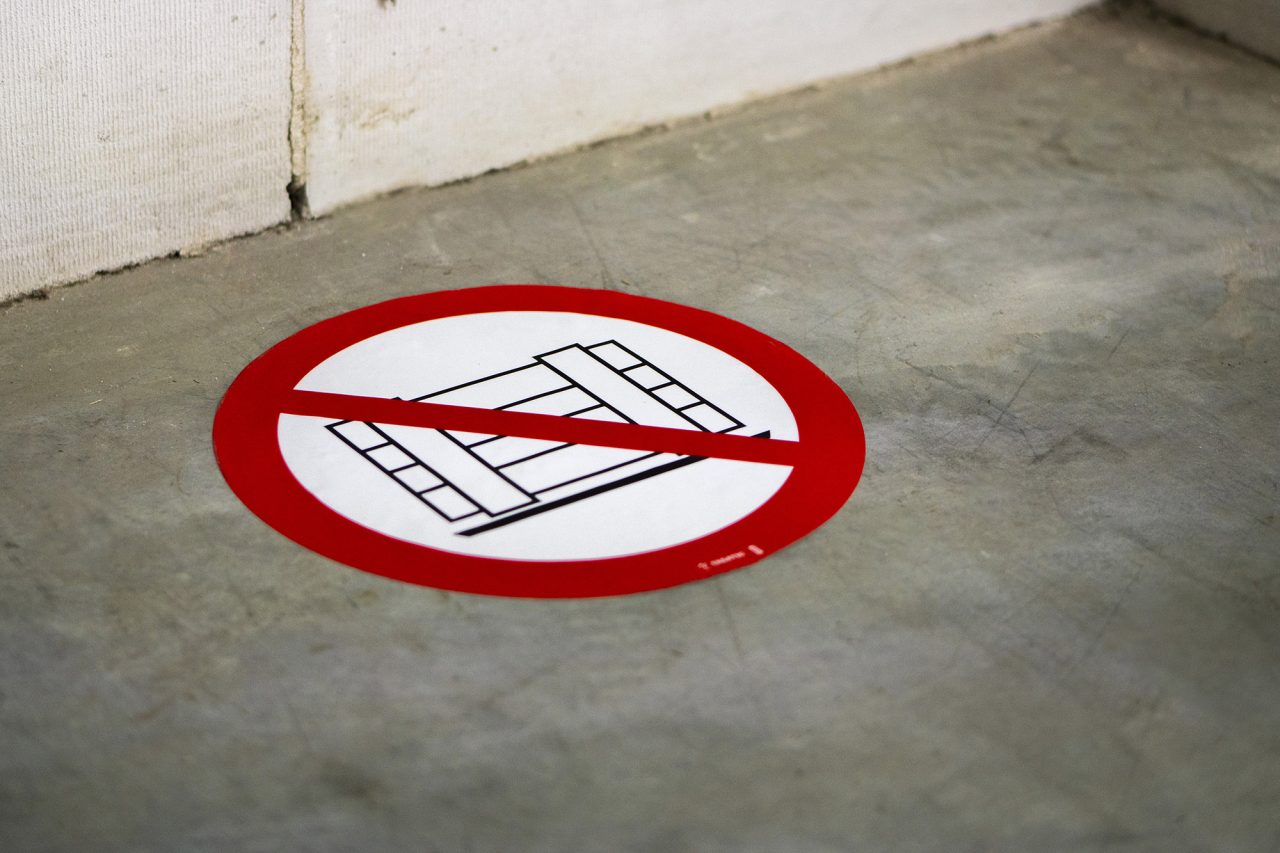
Visual management doesn't replace regulations or training. However, it ensures that safety information reaches people before they even have a chance to read it.
The rules say "tag." Visual Management explains how.
Occupational health and safety regulations specify what must be visible in a workplace. However, they don't specify how to communicate this so that it actually works. A sticker with a pictogram stuck somewhere on a wall meets the formal requirement. But will an employee who sees it for the fifteenth time still pay attention to it and comply with it?
Visual Management asks a different question: how can we design a space so that appropriate behavior is obvious, not just required?
Before someone enters the hall
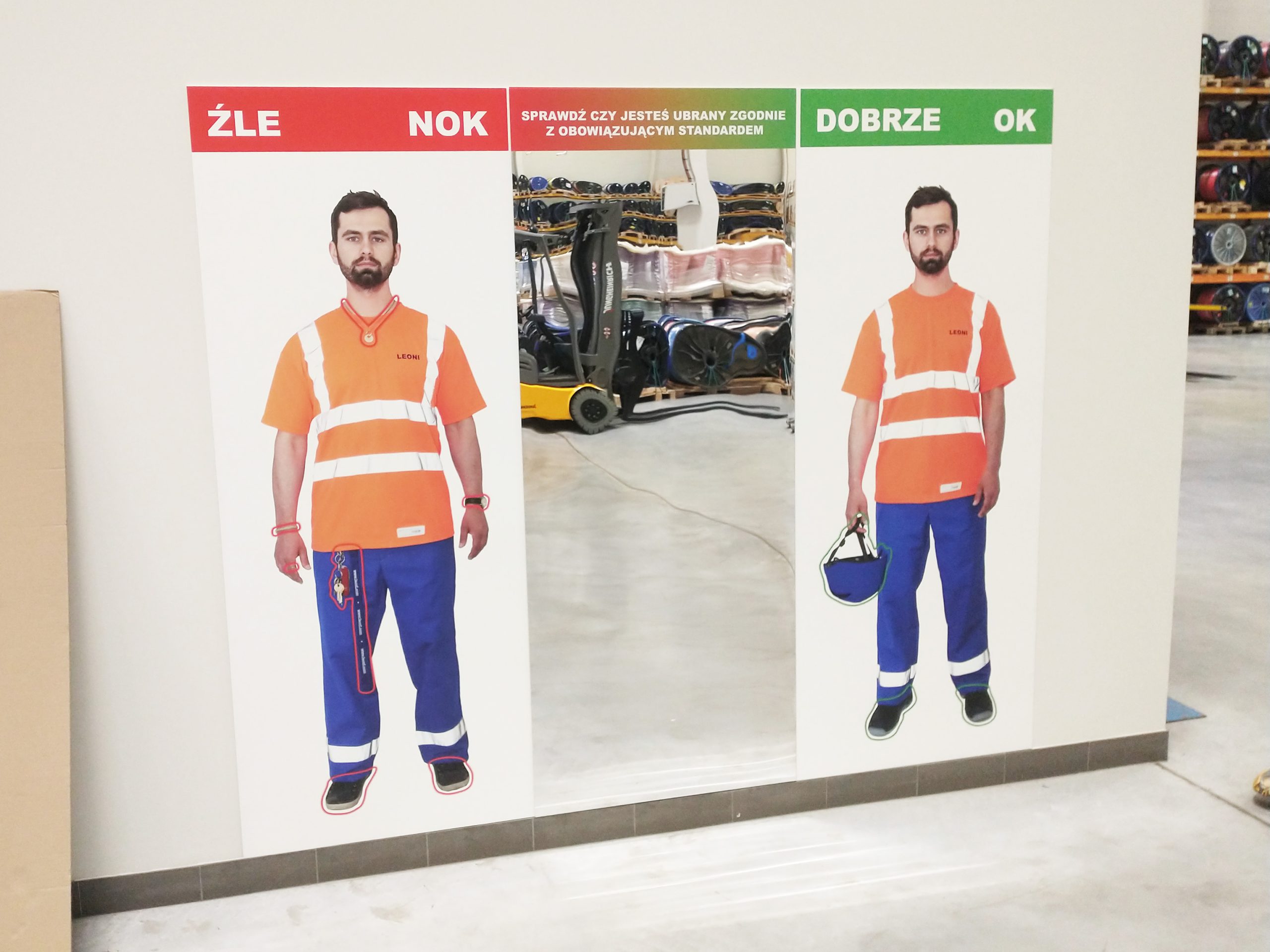
One of the visual management tools in the area of occupational health and safety is a mirrored board at the entrance to the production hall. Employees stand in front of it and see two things simultaneously: themselves and an illustration of someone in full protective equipment.
There's no need to read a list of requirements. They compare the image with what they see in the mirror. They immediately see what they already have and what they're missing. The regulations and prohibitions for a given area are often displayed next to the mirror. Everything is in one place, before someone takes their first step onto the arena floor.
The Occupational Health and Safety Point is a system, not a set of stickers
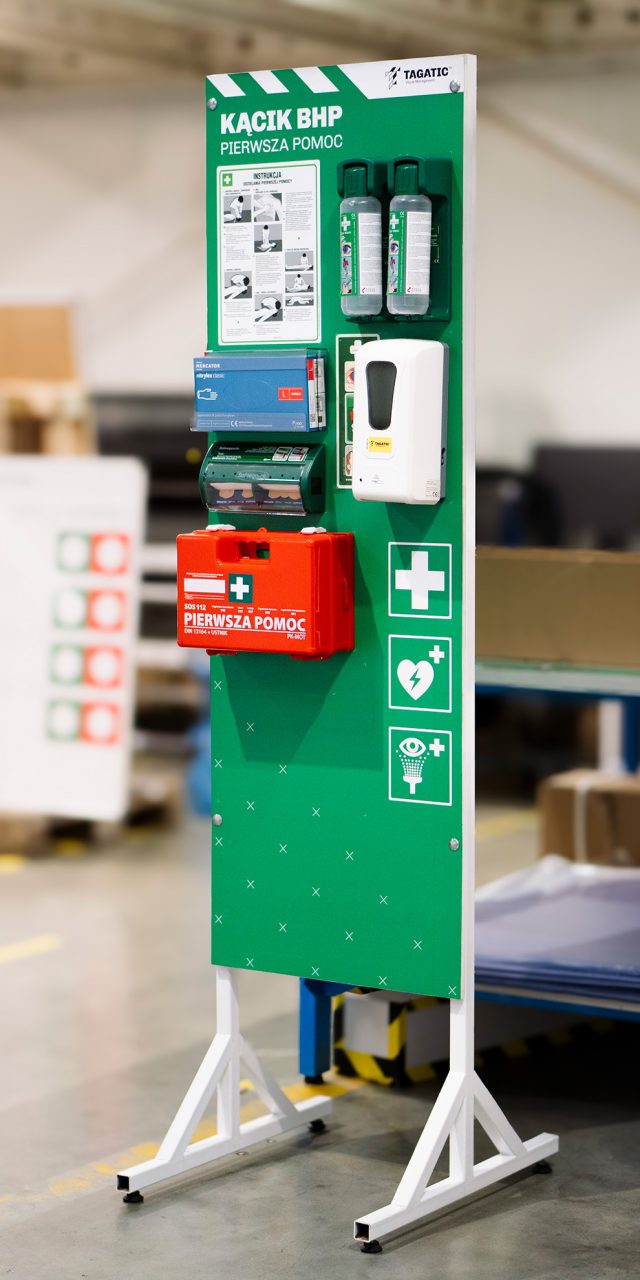
A similar logic applies to the organization of emergency equipment. A fire extinguisher, an AED defibrillator, a first aid kit with instructions – every plant has these somewhere on the floor. The question is: does every employee know exactly where they are and can they access them without thinking?
In a well-designed health and safety station, all these elements are brought together and described in a way that requires no interpretation. The fire safety section explains which fire extinguishers are available and what they are used for. The first aid section provides instructions and appropriate equipment within easy reach. The AED is marked and visible from a distance.
Spatial signs, pyramids, and crosses suspended from the ceiling, make the health and safety point visible even from across the hall. In an emergency, no one needs to search for it. Employees should immediately know where to go for the necessary accessories and tools.
Visibility is also safety
Visual Management can be treated as one big manual that tells employees how to move around the plant safely, without memorization.
Floor tapes and stickers mark pedestrian paths and wheelchair zones. Pedestrian crossings at intersections. Markings indicate zones where specific protective equipment is required. Each of these solutions works on the same principle: proper behavior is visible before someone makes a bad decision.
It's worth mentioning one detail that's rarely obvious: signage must be legible in real-world plant conditions. Dust, intense industrial lighting, traffic, and noise all impact whether the message reaches the recipient. For this reason, the choice of materials and formats is just as important as the content of the signage itself.
Health and safety that you can see
Occupational health and safety regulations have been in place for a long time. Occupational health and safety training is conducted regularly. Yet accidents still occur, often because someone acted automatically, without reflection, in a hurry.
Visual management doesn't eliminate risk. But it does reduce the number of situations in which an employee has to stop and think, because the answer to the question "how should I proceed here?" is already visible on the wall, floor, or board at the entrance.
Occupational health and safety training builds knowledge and awareness. Lean trainingspecializes Leantrix , teaches how to view a plant as a system and design it so that appropriate behaviors are the easiest option available. Visual Management is the point where these two approaches converge.
For an occupational health and safety specialist, Visual Management is a tool that makes regulations really work.
If you're wondering what a well-designed health and safety point or a mirrored board looks like in practice, we'd be happy to show you our projects.
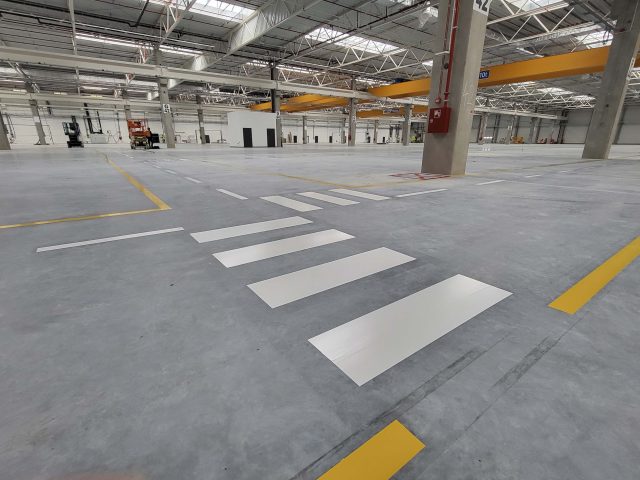
The horizontal signage project for the new HOMAG Polska production hall. Our task was to design and implement a complete pedestrian and forklift traffic path system, ensuring the hall was ready for safe operation even before production began.
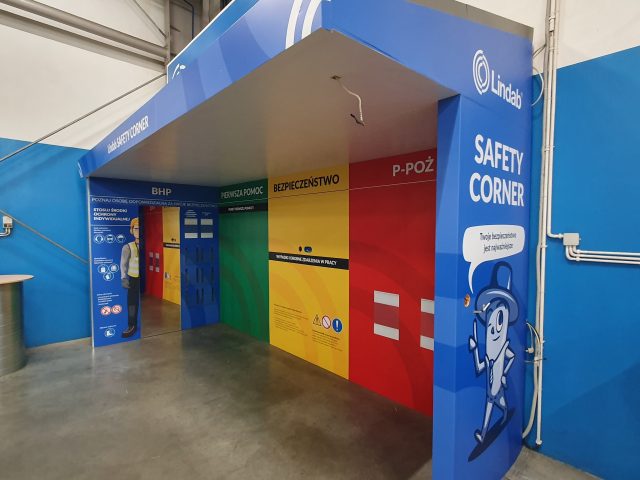
Our collaboration with Lindab Polska, a manufacturer of gutter and ventilation systems, began in a unique way – with an inquiry about creating a safety corner. The company was looking for a partner who could help design and deliver complete signage and visual design for the health and safety area. Although initially intended as a standard project, it quickly became clear that together we could create something more – something that would last.