TWI training - How to implement employees in production?
Employee turnover and seasonal hiring are among the biggest obstacles to maintaining standards on the shop floor today. Not because new hires are inferior, but because the induction they receive often doesn't give them the opportunity to understand and remember these standards.
Implementation or surviving the first week?
Most onboarding sessions in manufacturing go something like this: a new employee receives a tour of the facility, a few health and safety slides, and then is paired with someone "with experience" to observe how things are done. The latter is sometimes quite effective if they find someone patient and well-organized, but if they find someone who has their own quota to meet and doesn't have time to explain, the new employee learns through observation and trial and error.
The problem is that trial and error in production can be costly. It's not always about accidents or serious damage , but often more subtle losses: a tool being put down haphazardly because no one explained its specific location. Raw materials being picked in the wrong order. An operation being performed from memory, omitting steps no one mentioned. Each of these things is a minor detail on its own, but when repeated by successive employees on a larger scale, it becomes a real cost.
TWI, or learning at the workstation, step by step
Training Within Industry is a program that originated in the United States during World War II, when factories had to rapidly train tens of thousands of new workers to operate machinery they had never seen before.
The key discovery was simple: for someone to learn to perform surgery well, it's not enough to tell them what to do. They need to be shown, allowed to repeat under the supervision of an instructor, checked for understanding, and ensured they can operate independently before being left with a machine and a standard to meet.
The TWI Employee Instruction module is based on four steps:
- preparation of the learner,
- presentation of the operation,
- checking the execution,
- observation of independent work.
It sounds simple, but the devil is in the details, specifically the fact that most production leaders have never been taught how to train others . They onboard new employees the way they themselves were once onboarded: "Watch what I do and do the same." This message works when you have the time and when you find a patient leader. In production, however, neither of these assumptions is guaranteed.
TWI training changes this dynamic. Leaders learn to deliver instruction in a structured manner that shortens the time to independence and leaves less room for errors resulting from incomplete understanding. Leantrix , with whom we collaborate, specializes in implementing TWI in Polish manufacturing companies.
If you'd like to learn more about this program in practice, visit the Leantrix website dedicated to TWI Employee Instruction. Learn about the entire process and the specific benefits of implementing it on the shop floor.
What does Visual Management have to do with it?
It is important to remember that even the best training in the world is not enough if the workstation itself does not "tell" the employee what is where and how it should look.
Imagine this: a production leader is patiently and step-by-step instructing a new employee according to all TWI principles. After a week, the employee is doing great. But after a month, when he's working independently, he begins to improvise. Not out of malice, but because the job doesn't suggest proper behavior. Tools aren't clearly marked, zones aren't labeled, and there's no visual "memory" of what normal conditions look like.
Good onboarding and good visual management reinforce each other.
TWI teaches employees how to act. Marking their workspace makes the right action the easiest option available, even when no one is watching and several months have passed since the training.
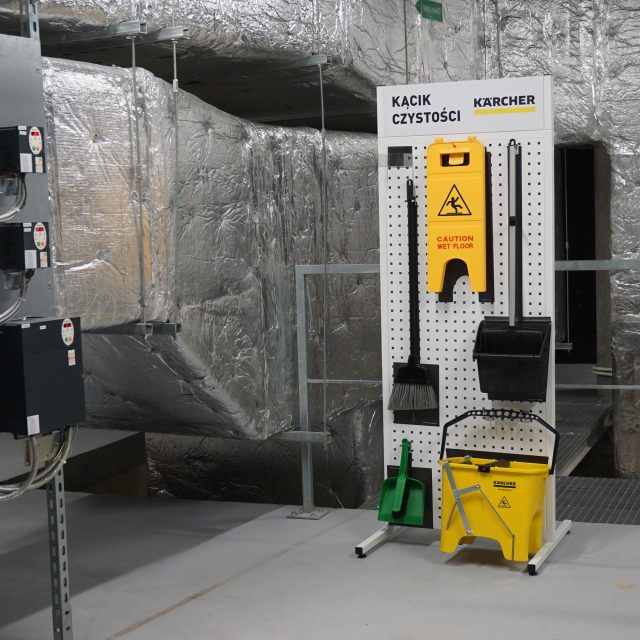
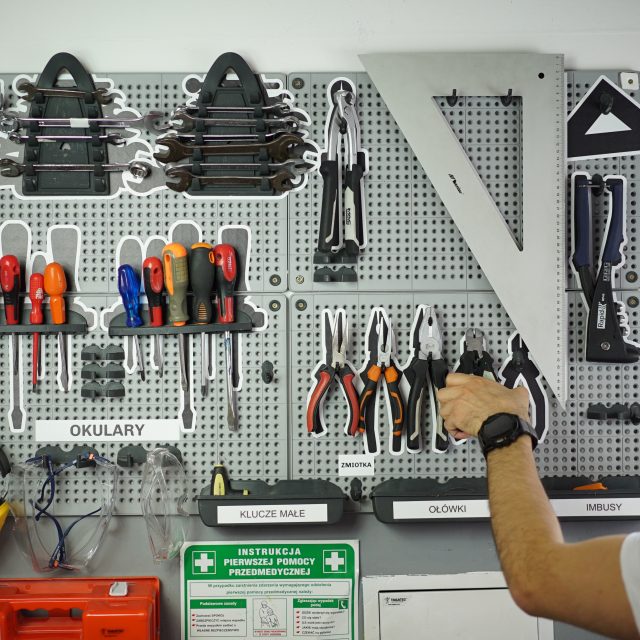
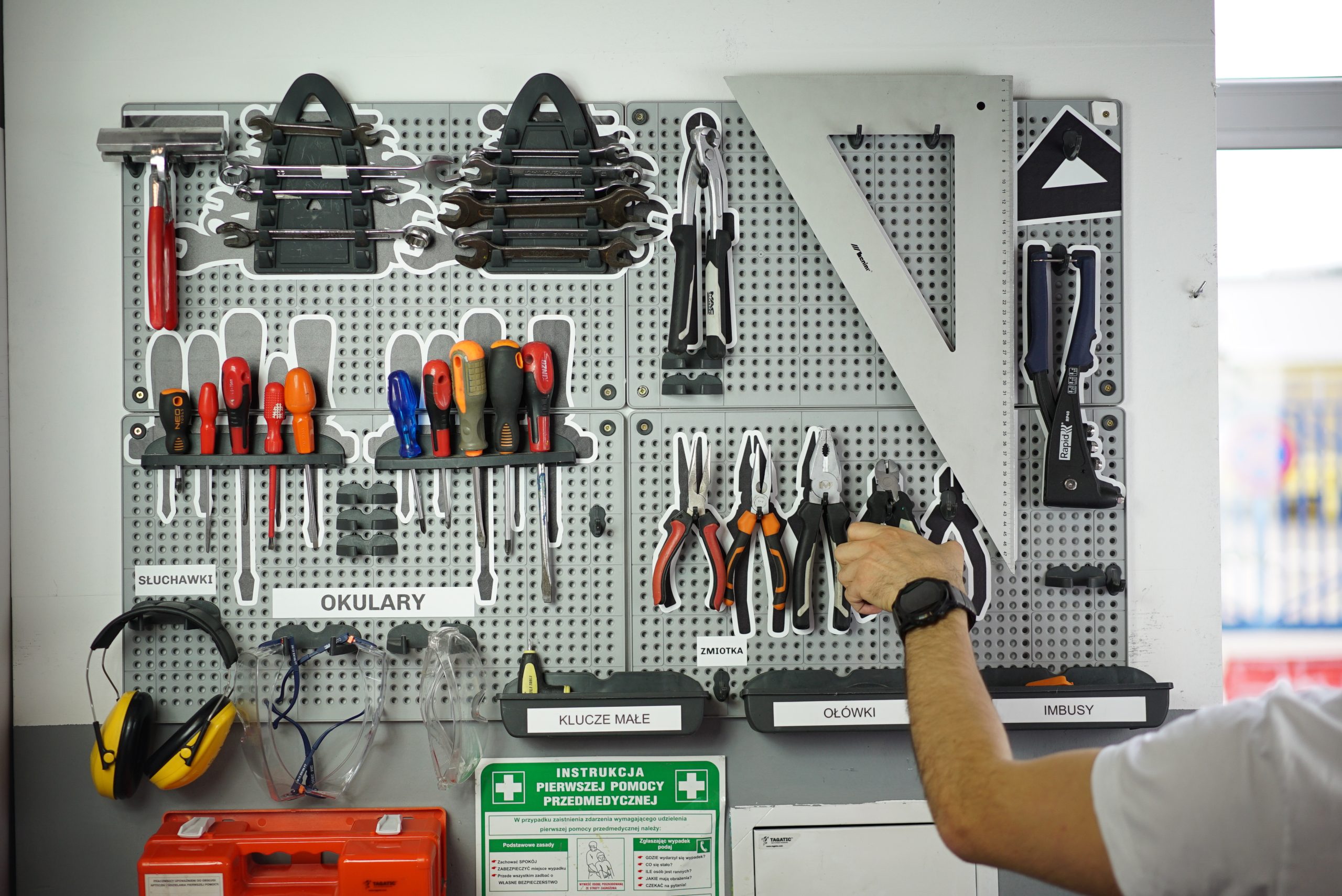
- Shadow boards at the workstation that clearly show where each tool is and which one is missing.
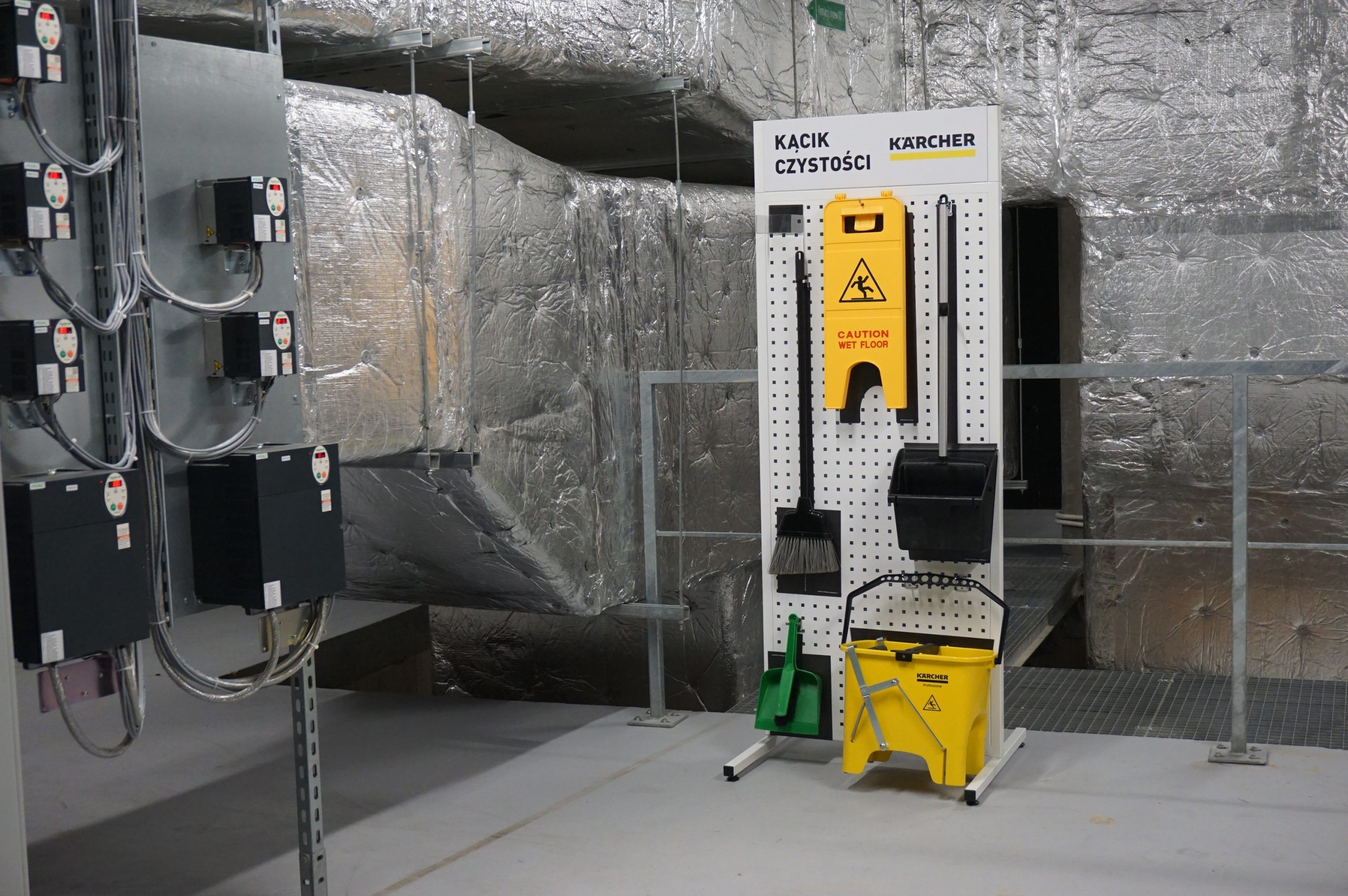
- A cleanliness corner with clearly marked equipment so that no one wonders where to put the broom after cleaning.
- Competency boards on the shop floor that show who is already independent in a given position and who still requires supervision, and that do so in a way that is visible to the entire team.
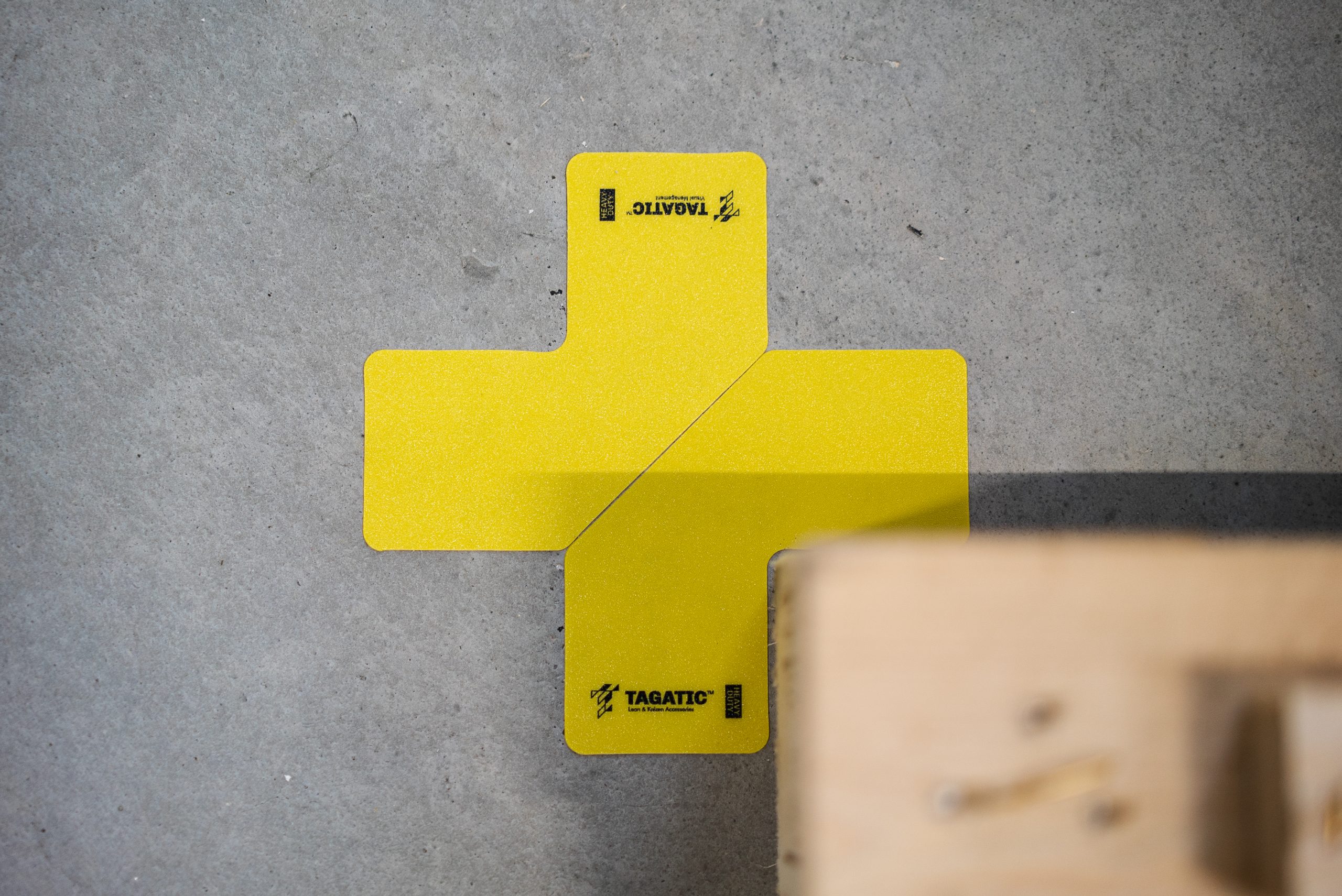
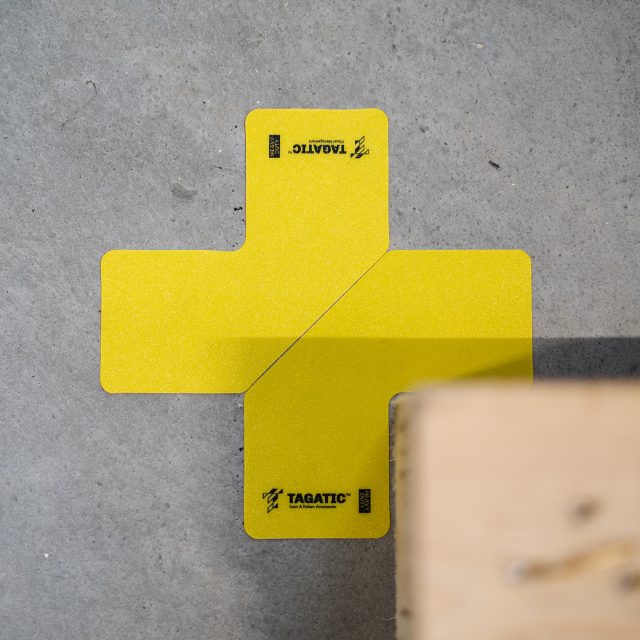
- Markings of zones and paths that a new employee understands without instructions because they are clear and consistent.
Such solutions constitute the organization's external memory and work regardless of who is currently in the hall.
Onboarding That Survives Rotation
If your company hires new employees regularly or struggles with seasonal hiring surges, it's worth asking yourself one question: does our onboarding process work regardless of who runs it?
A good production onboarding system should be resilient to the absence of a leader, changes in instructors, and time pressures. A structured learning method like TWI gives leaders a concrete tool for transferring knowledge. Visual management makes standards clear without words. Together, they create an environment where new employees can learn quickly and safely, and the effects of this learning remain in the workplace long after the instructor moves on. If you want to learn more about how to shorten the learning curve and build an effective employee onboarding system, check out Leantrix's resources on this topic.
And if you're wondering if your workplaces are ready to "speak" for themselves, we'd be happy to help you find out. Just start with an audit .