
UV printing in industrial marking – what are its properties?
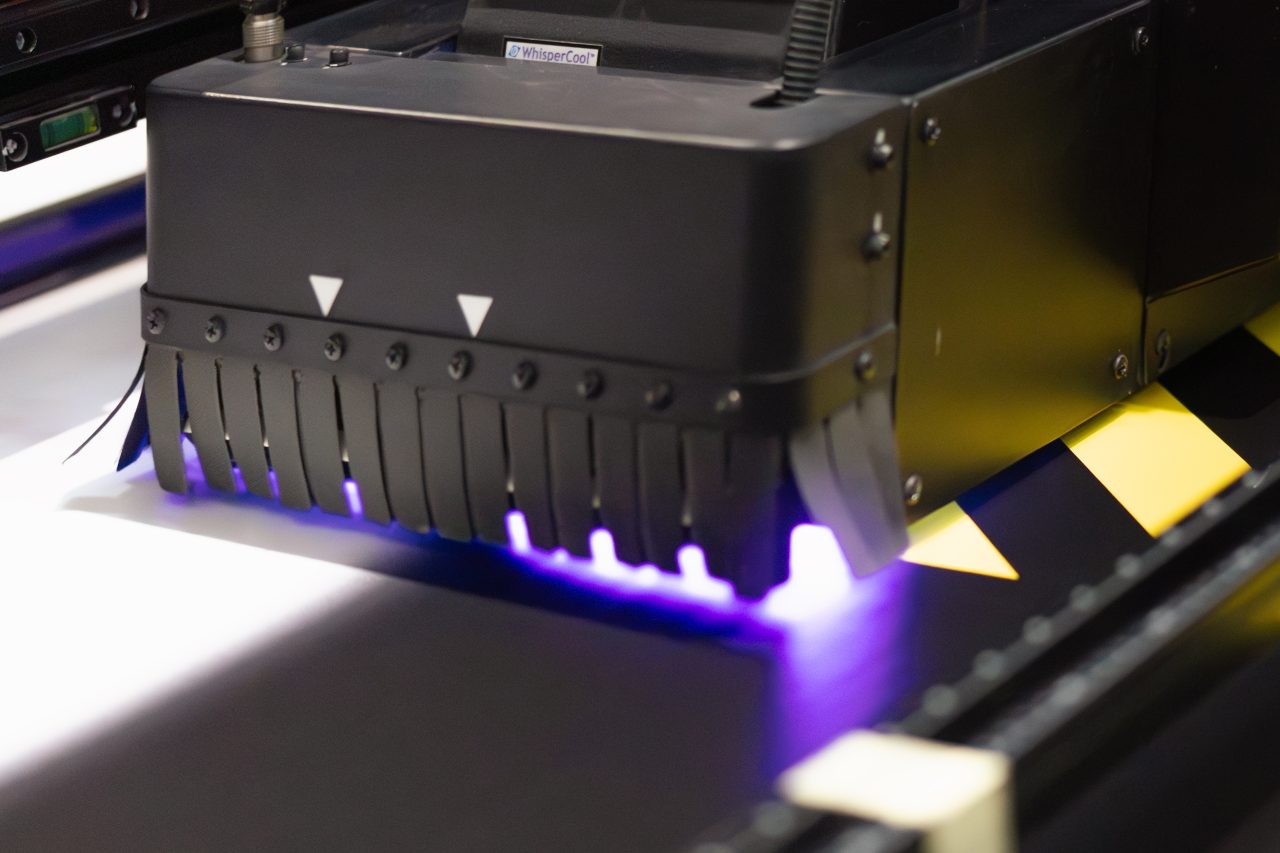
UV printing is a technology that allows you to apply durable, industrial-strength graphics to virtually any surface, including transparent plastics, foils, and PVC. Learn why we use it in our signage.
UV printing in industrial marking – durability, color and white print on transparent surfaces
Every sign we produce at Tagatic goes through the same process: printing, which must withstand real-world conditions. Forklift traffic, cleaning agents, dust, and temperature fluctuations. In this context, printing technology is paramount. One of the technologies we use in-house is UV printing .
What is UV printing?
UV printing (ultraviolet printing) is a method in which the ink is rapidly cured using UV lamps immediately after being applied to the substrate. Instead of drying, it cures photochemically, resulting in an immediate print and a permanent bond to the material.
In practice, this means several things: the colors are vibrant and fade-resistant, the print surface is hard and abrasion-resistant, and the substrate itself can be virtually any material. It can be foil, PVC, glass, metal, or even wood.
UV printing on PVC
PVC (polyvinyl chloride) is the material from which most of our products are made – frames, floor windows, and signs. It is tough, requires strong ink adhesion, and does not tolerate poor print quality.
UV printing is excellent for PVC: the ink penetrates the surface structure and, once cured, is virtually impossible to remove mechanically. The print does not peel, fade with washing, or react to standard cleaning agents used in production halls.
White underprint
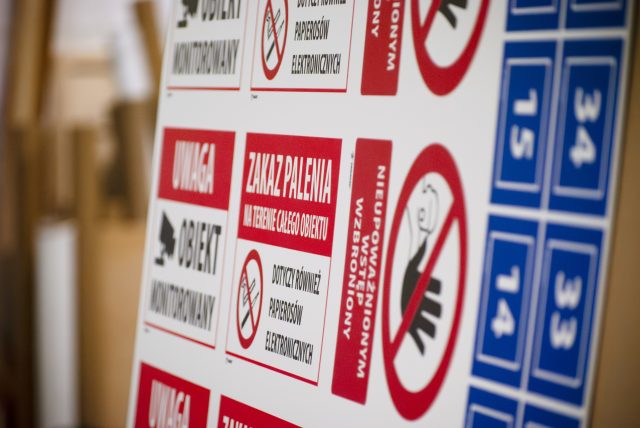
This is one of the most practical, yet rare, aspects of UV printing: the ability to apply white as a standalone opaque layer beneath the actual print . It sounds technical, but the implications are very concrete.
In standard printing, white is simply the color of the paper—it's not printed separately. In UV printing, white ink is a full-fledged ink, applied as a base before other colors. And here begins the problem, which many printers simply don't solve—because they don't have the resources.
Customers come to us for this very reason. They've ordered prints on clear or colored materials elsewhere, and the results were nothing like what they saw on screen. The colors were faded, translucent, and "dirty"—because that's just how printing without a white underprint on a non-white substrate looks.
Some real-life cases that illustrate this well:
Transparent PVC material
— without a white underprint, the print "bleeds into" the color of whatever is underneath. On the floor, with a changing background, the marking becomes illegible. The white underprint ensures the colors are as they should be.
Brushed dibond
— a material that appears silver. Without an underprint, any color applied directly to this surface changes its hue—because the metallic sheen shines through the ink layer. A white underprint neutralizes this background and allows the client to maintain their exact color scheme.
Wood imitation foil
— the fabric's own texture and color. The client wanted a specific color according to their branding standard. Without underprint, that was impossible. With underprint, the color came out exactly as per the swatch, regardless of what was underneath.
How does it work in our products?
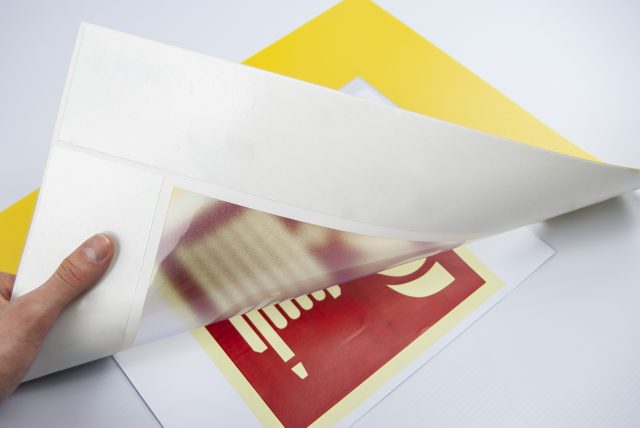
5S floor windows are made of hard, transparent PVC. Their purpose is to protect the slips of paper inserted inside, containing zone designations, location descriptions, or identification codes. This becomes problematic when the window is placed on a stained or uneven floor – the color of the substrate can bleed through the material, compromising legibility.
UV printing with white ink solves this problem precisely: printed areas that are intended to be opaque (e.g., frame, border, label background) are covered with a white opaque layer. The center of the window remains transparent, ensuring the inserted card remains clearly visible. The result is clean, legible, and repeatable in every piece.
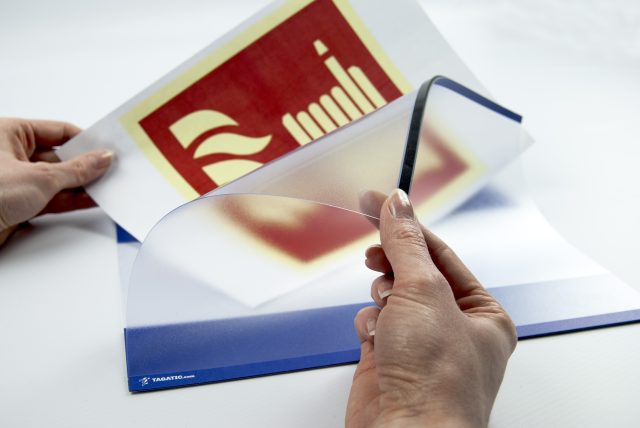
We use exactly the same mechanism in our 5S frames made of PVC. They're a transparent frame with white printed areas that aren't meant to show through the board or background.
UV printing at Tagatic
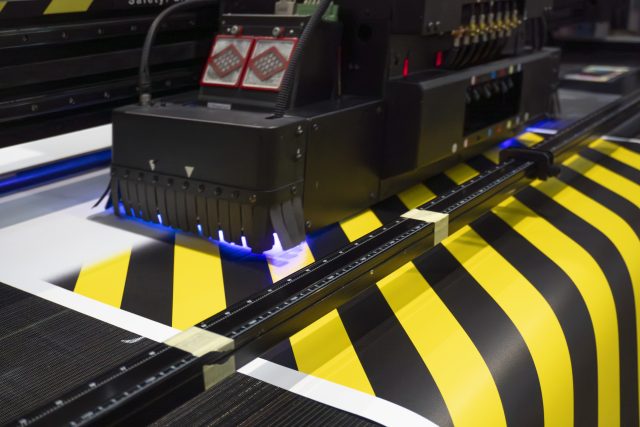
We have our own UV printing machine, which translates into several specific things for our customers: full quality control at every stage, the ability to fulfill custom orders, shorter production times, and flexibility in terms of materials and formats.
We're not a middleman. We print ourselves, which means we can also modify print parameters to suit your specific needs. Different materials, different color layers, different print weights – we discuss these before it even hits the press.
Outdoor UV printing – weather resistance
UV printing is not only great for indoor use. Chemically cured inks are resistant to UV radiation, moisture, and temperature fluctuations, making them a good choice for outdoor signage.
This is how we create signs that appear at company entrances. These include entryway markings, information boards at gates, and on-site direction signs. The color doesn't fade in the sun, and the print doesn't come off in the rain.
When does UV printing matter?
UV printing isn't just about aesthetics. In industrial environments, it determines whether the marking will withstand harsh operating conditions, such as aggressive cleaning, abrasion, contact with oil, fluctuating temperatures, and exposure to sunlight .
If you'd like to learn more about the technology we use for a specific product or material, please contact us. We'll be happy to help you find a solution tailored to your work environment.